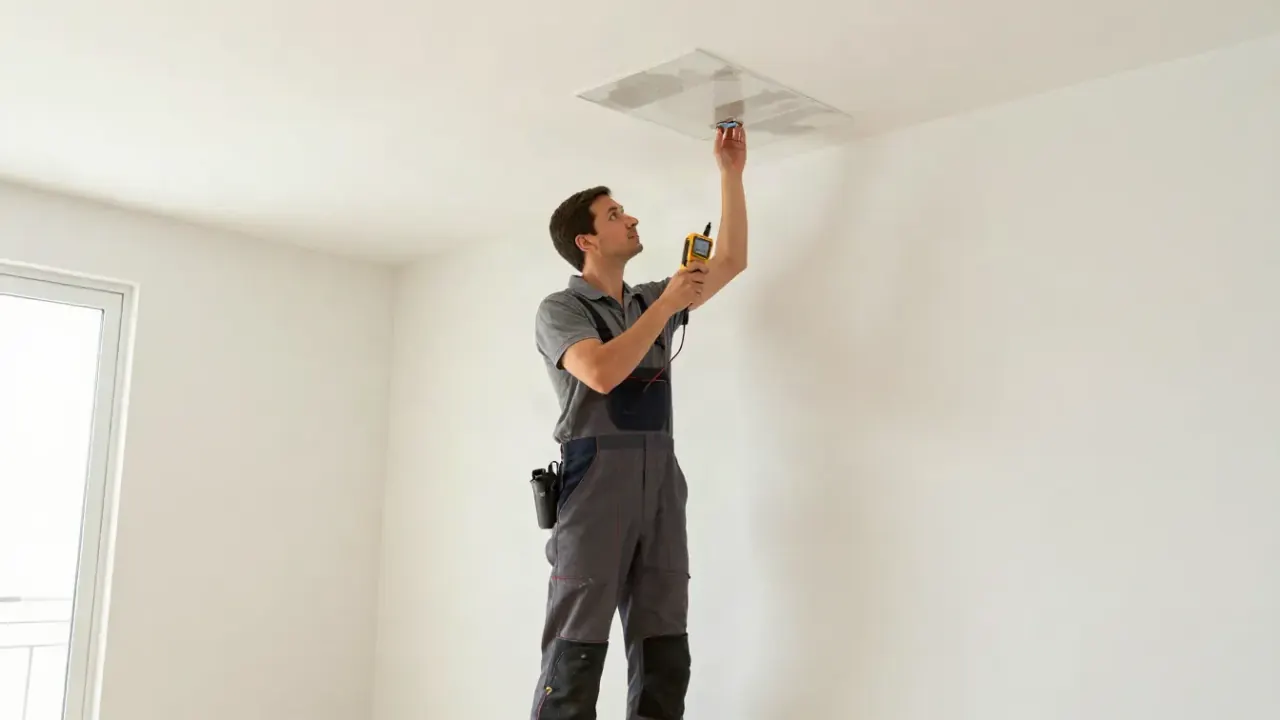
For Homes
We locate service line leaks for homeowners and tenants across Wellington. You get a marked spot and a plain explanation of what failed.
- High water bill
- Soggy yard spot
- Meter spinning silent
Water Service Line Leak Location Wellington FL is the service that pinpoints exactly where your buried water line is leaking, without tearing up your whole yard. If your water bill spiked, your meter keeps spinning, or you have a soggy patch in the lawn, we trace the line with acoustic and thermal gear and mark the break. We work across Palm Beach County and most jobs are located in under two hours.
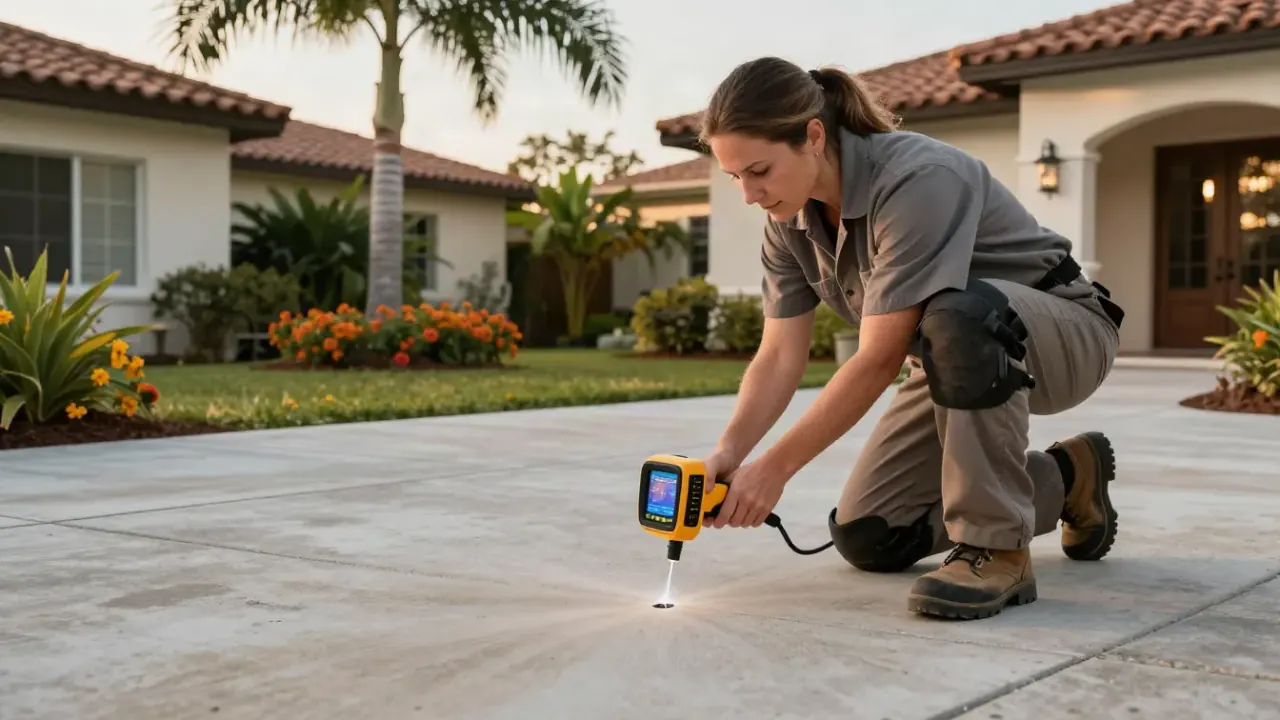 Meter check firstAcoustic sweepThermal confirm
Every leak location visit covers the full diagnostic sweep from meter to house entry. We do not charge extra for using multiple tools or for walking a long line. Here is what is included in a standard call, and what we quote separately.
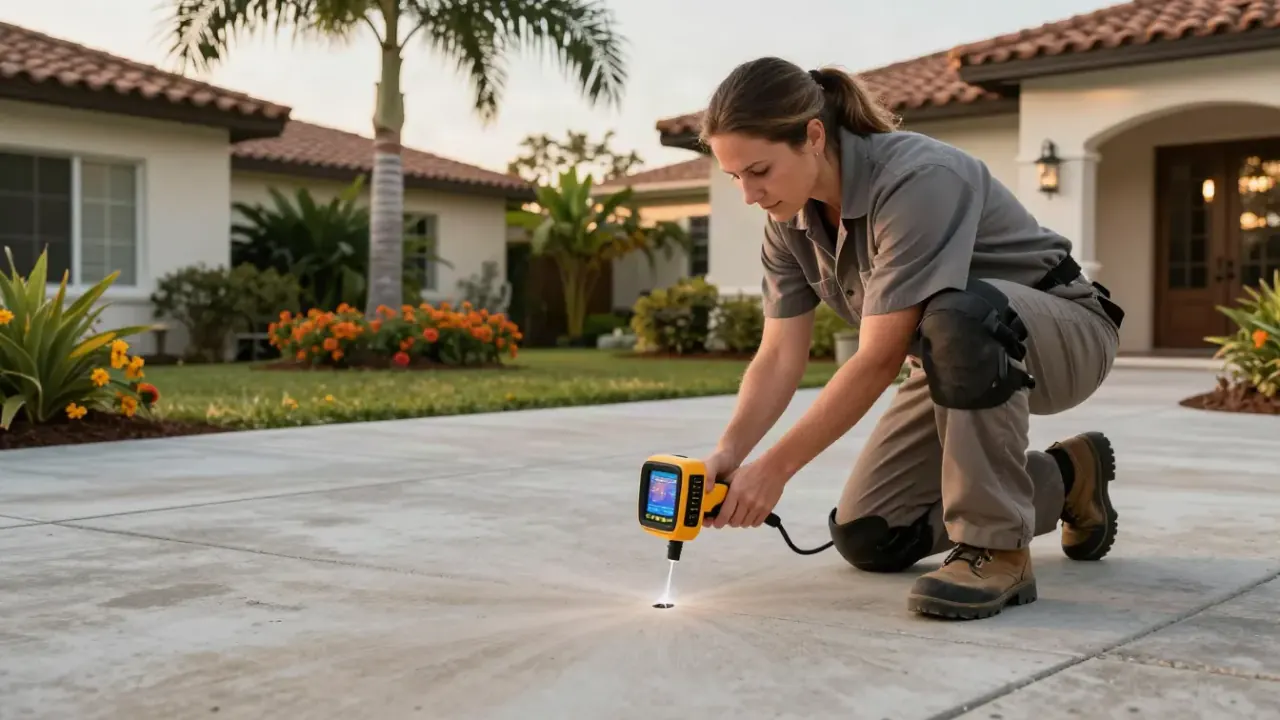
We shut off all fixtures and watch the meter for movement, then pressure test the service line to confirm the leak is underground. This step tells us whether we are chasing a service line break or an indoor fixture leak.
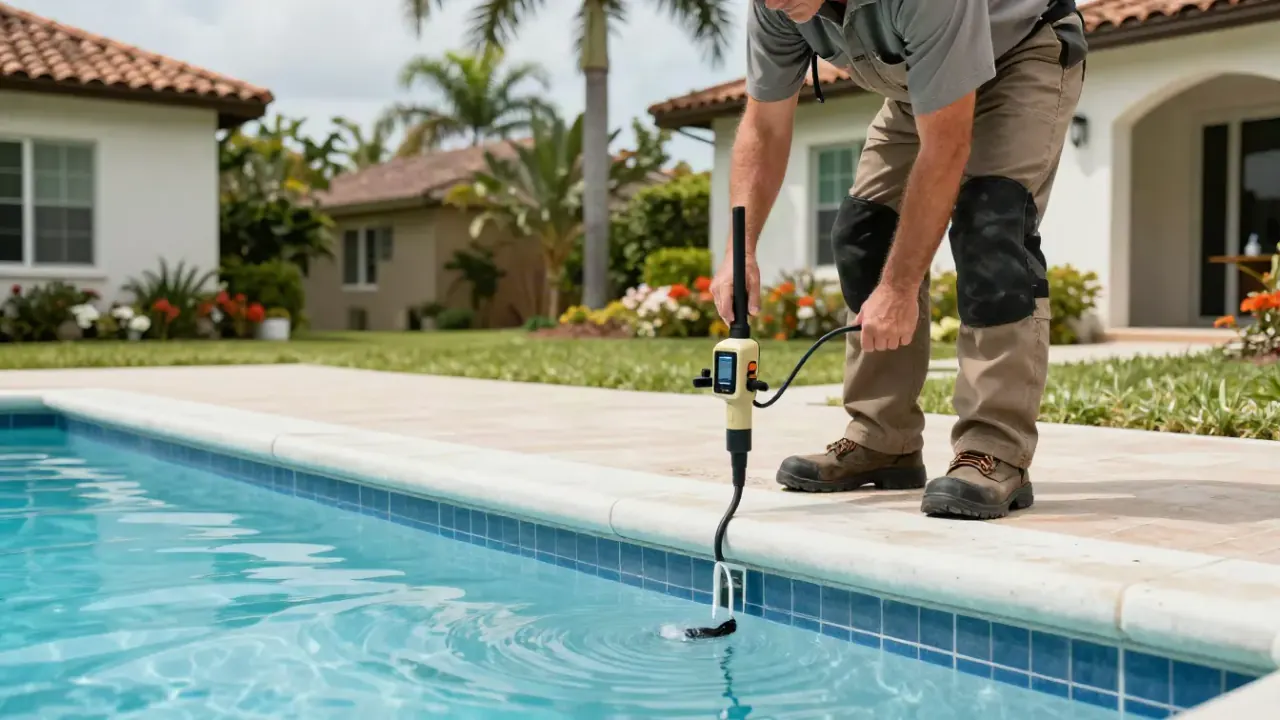
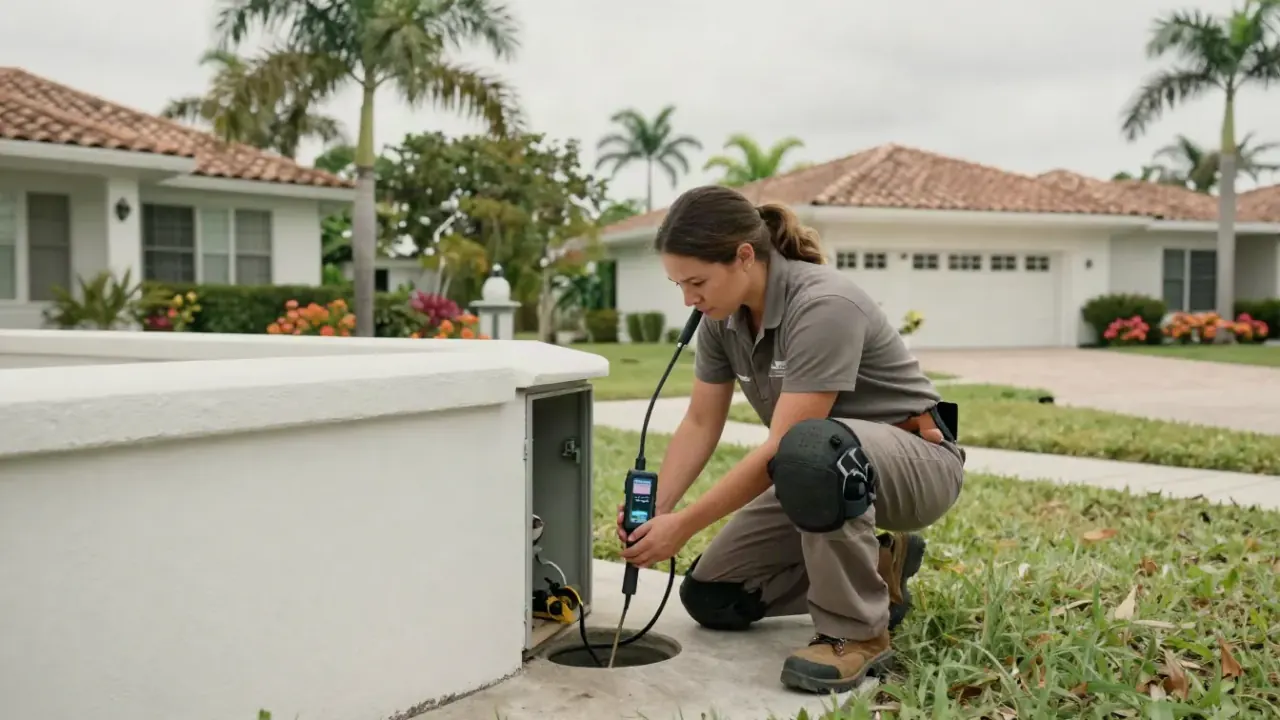
We walk the full line path with acoustic listening devices to hear the pressurized water escaping the pipe. The hiss gets louder as we approach the break. We sweep the entire run, not just the wet spot.
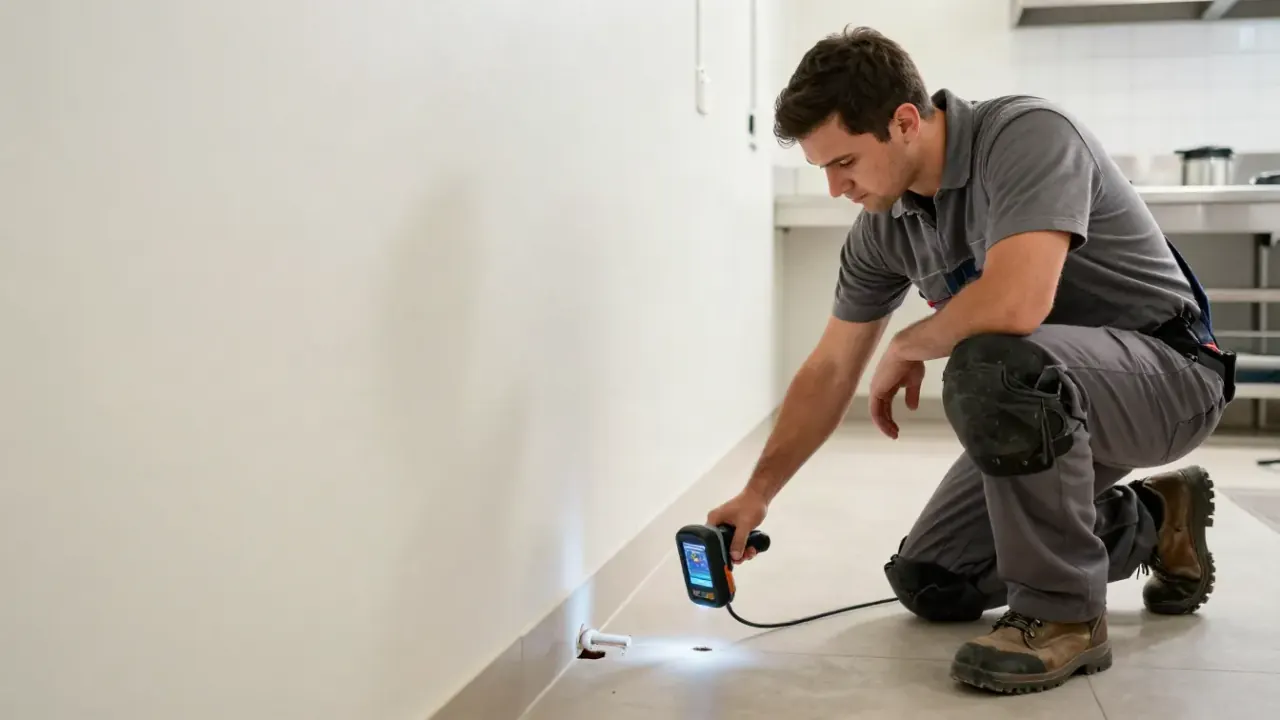
A FLIR thermal imaging camera shows temperature differences in the soil where water is pooling or moving. We compare the thermal signature against the acoustic reading. Both have to agree before we mark the spot.
We map the service line path with an electromagnetic pipe locator and mark the leak point with paint and flags. You see the marks before we leave. The line path is also marked so the repair crew knows where to dig.
You get a short written report with the leak location, estimated depth, pipe material, and photos of the thermal and acoustic readings. If you use your own plumber, hand them the report and they dig in the right place.
The approach is the same for a home and a business. What changes is the access, the schedule and who needs the paperwork.
We locate service line leaks for homeowners and tenants across Wellington. You get a marked spot and a plain explanation of what failed.
We locate service line leaks for property managers and business owners. Work is scheduled around your operating hours with minimal disruption.
A plain-language look at what Water Service Line Leak Location involves and when it is needed.
See how it worksWater Service Line Leak Location Wellington FL is a diagnostic service that finds the exact point of failure on the buried pipe running from your water meter to your home. We use acoustic listening devices, thermal imaging cameras, and electromagnetic pipe locators to follow the line underground and hear the leak. Once located, we mark the spot with paint so the repair crew digs one hole, not five. Most residential lines here are copper pipe or PEX tubing, and both fail differently.
Wellington sits on sandy soil and a high water table, so underground water service line leaks show up fast as wet patches near the meter box or a sudden jump in your bill. We see the problem most often in homes built before 2005 with original copper pipe, where pinhole leaks in copper pipes form after years of slightly aggressive water. If you need water service line leak detection near me, we cover the whole village and surrounding areas.
We find the break, mark the spot, and show you the evidence before we leave.
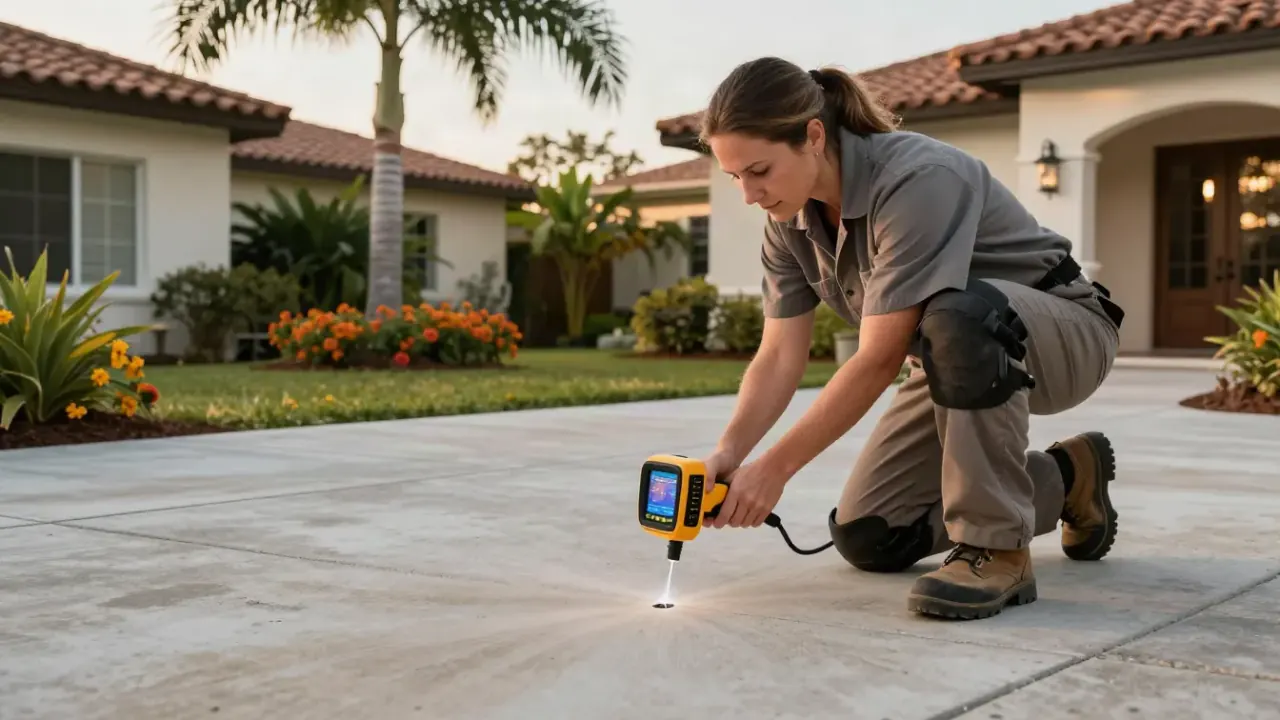
Five steps from your first call to a marked leak. Most jobs are done the same day, and you get a plain-English explanation before we leave.
You call (561) 760-4218 and describe what you are seeing: high bill, wet spot, spinning meter. We ask three or four questions to narrow it down. If it sounds like a service line leak, we schedule a two-hour window, usually the same day or next morning.
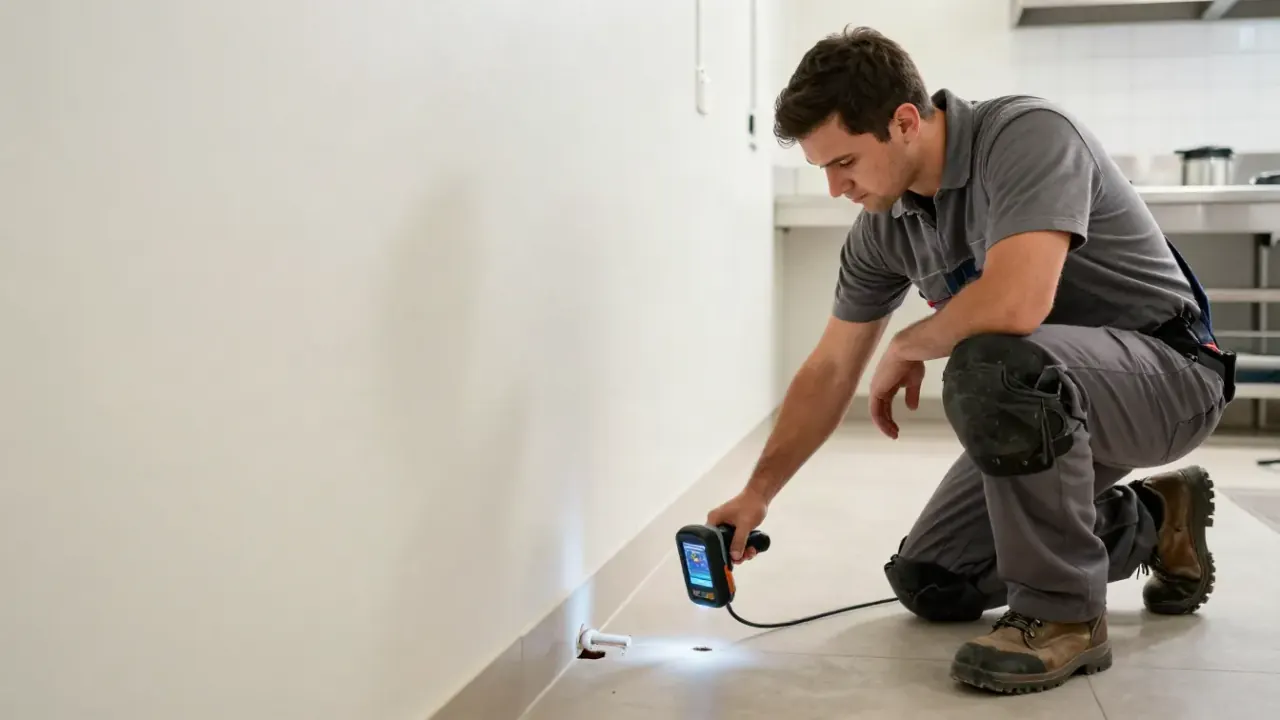
On arrival, we shut off every fixture inside and watch the meter. If the low-flow indicator still spins, the leak is on the service line. We then pressure test the line to confirm it holds or drops, which tells us whether the break is underground or inside the house.
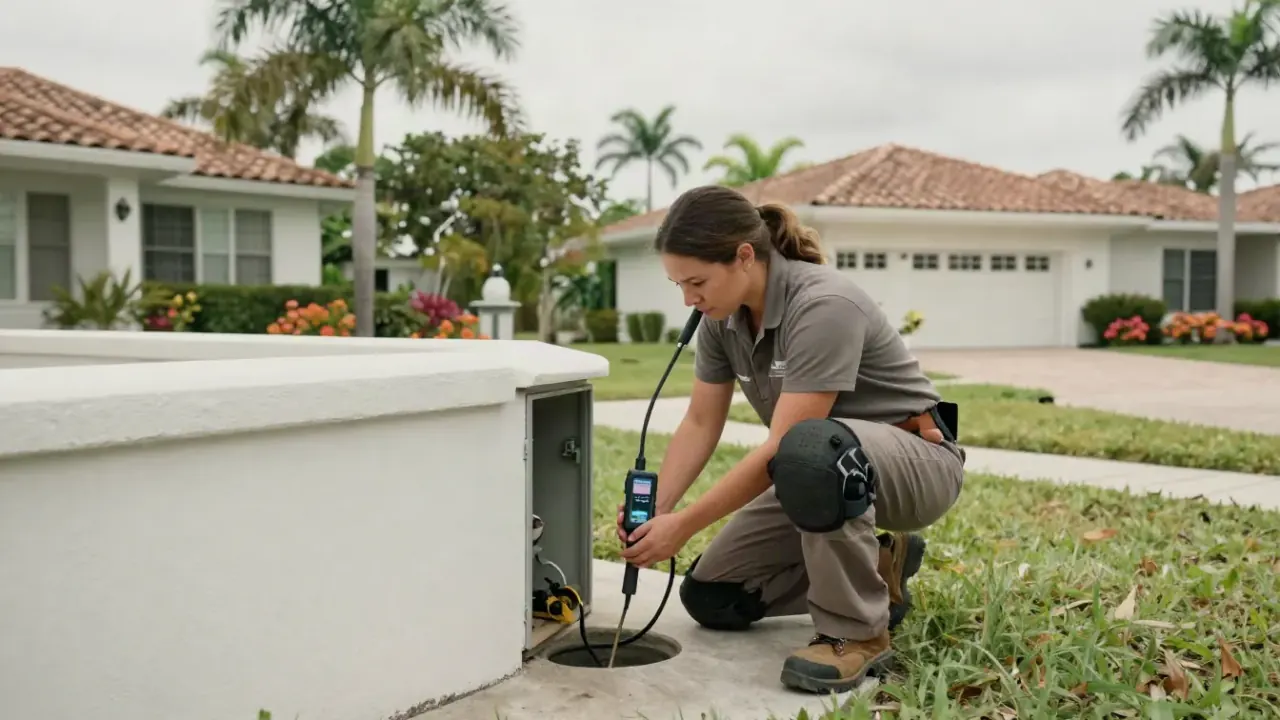
We walk the line with acoustic listening devices and a FLIR thermal imaging camera. The listening device picks up the hiss of pressurized water escaping the pipe. The thermal camera shows temperature differences in the soil where water is pooling. Both readings have to agree before we mark.
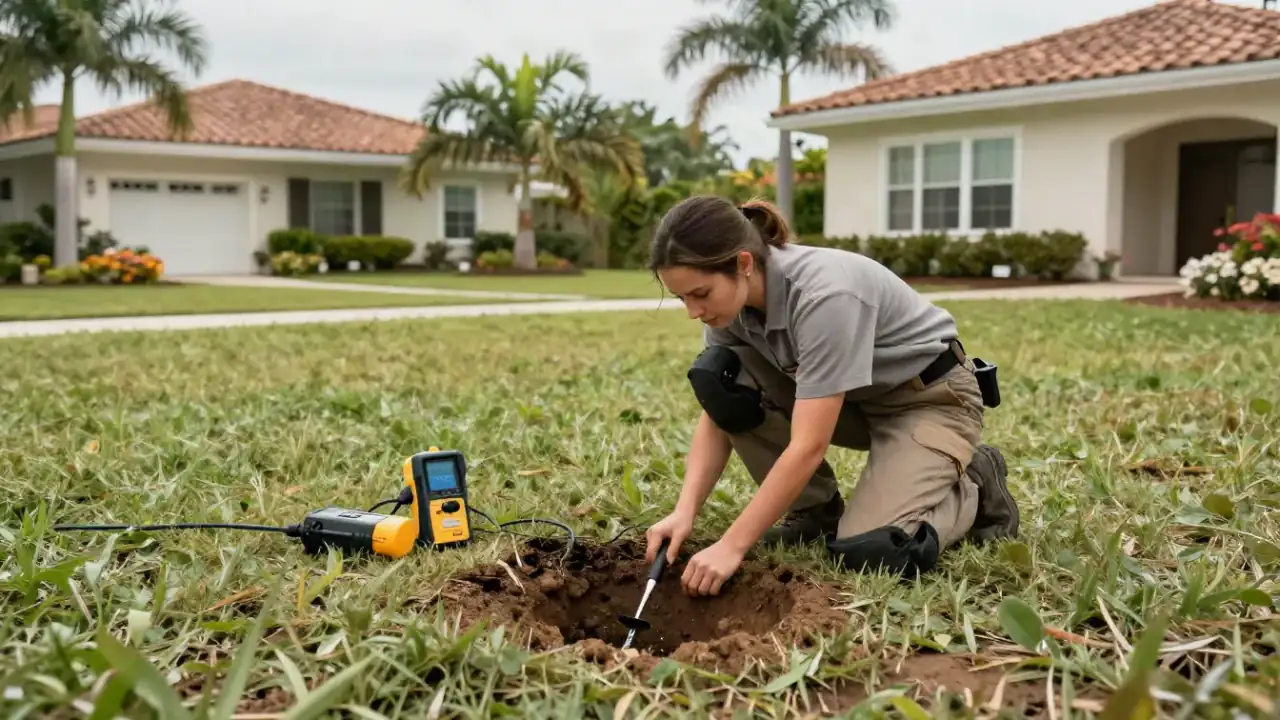
Using an electromagnetic pipe locator, we map the exact path of the service line from the meter to the house entry. We mark the leak point with paint and flag the line path. You see the marks before we leave, and we explain what failed and why.
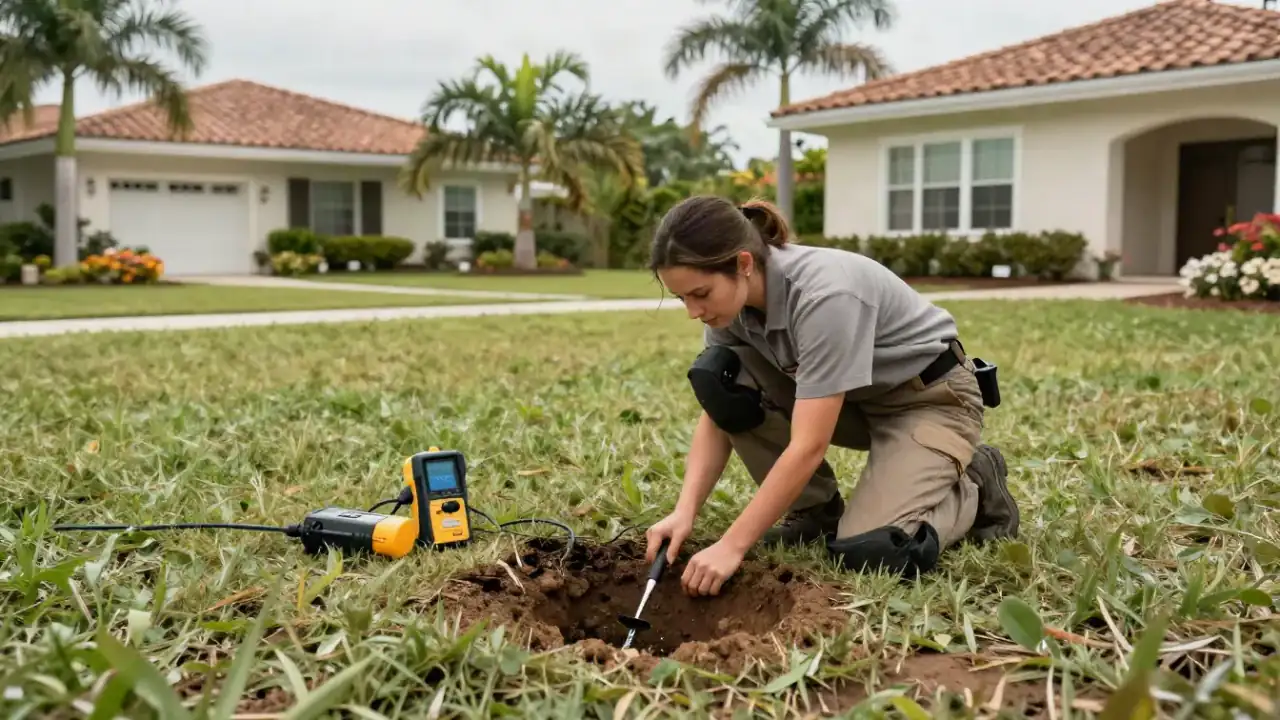
You get a written summary with the leak location, depth estimate, and pipe material. If you want us to handle the repair, we quote it on the spot. If you use your own plumber, we hand over the marks and photos so they dig in the right place.
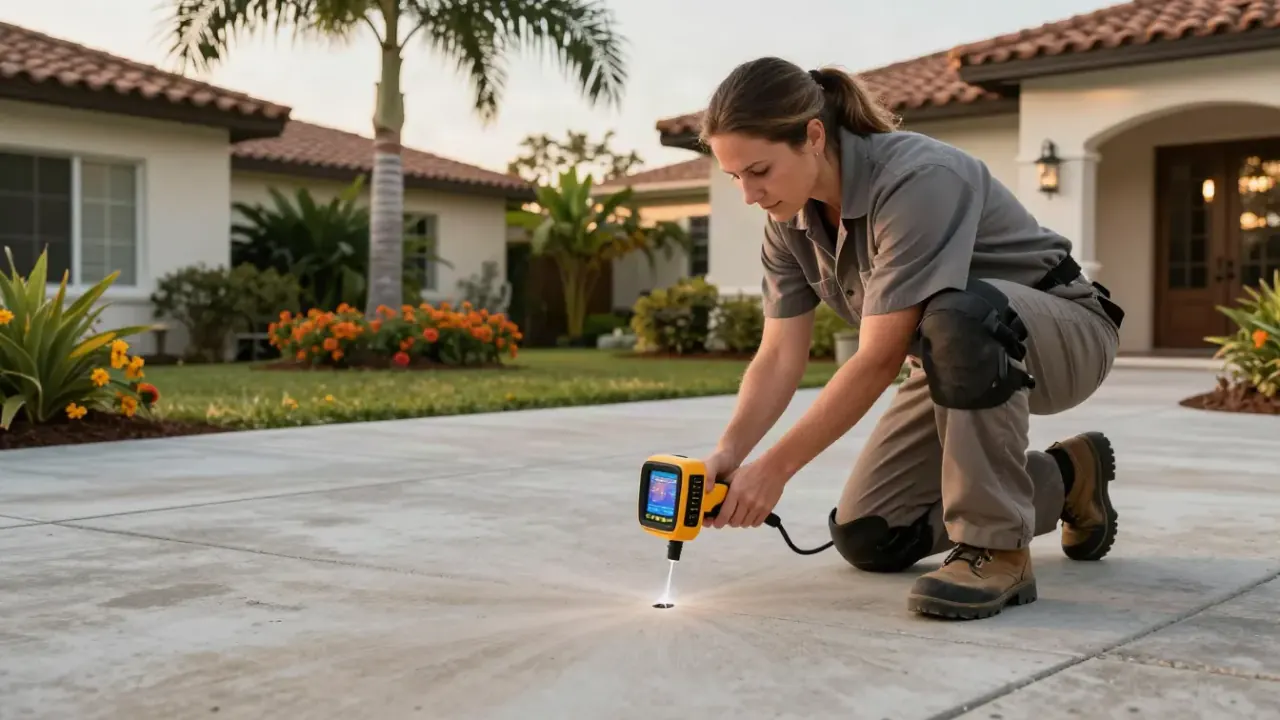
Move across a circle, or focus it and press Enter, for an illustrative thermal view of the photograph.
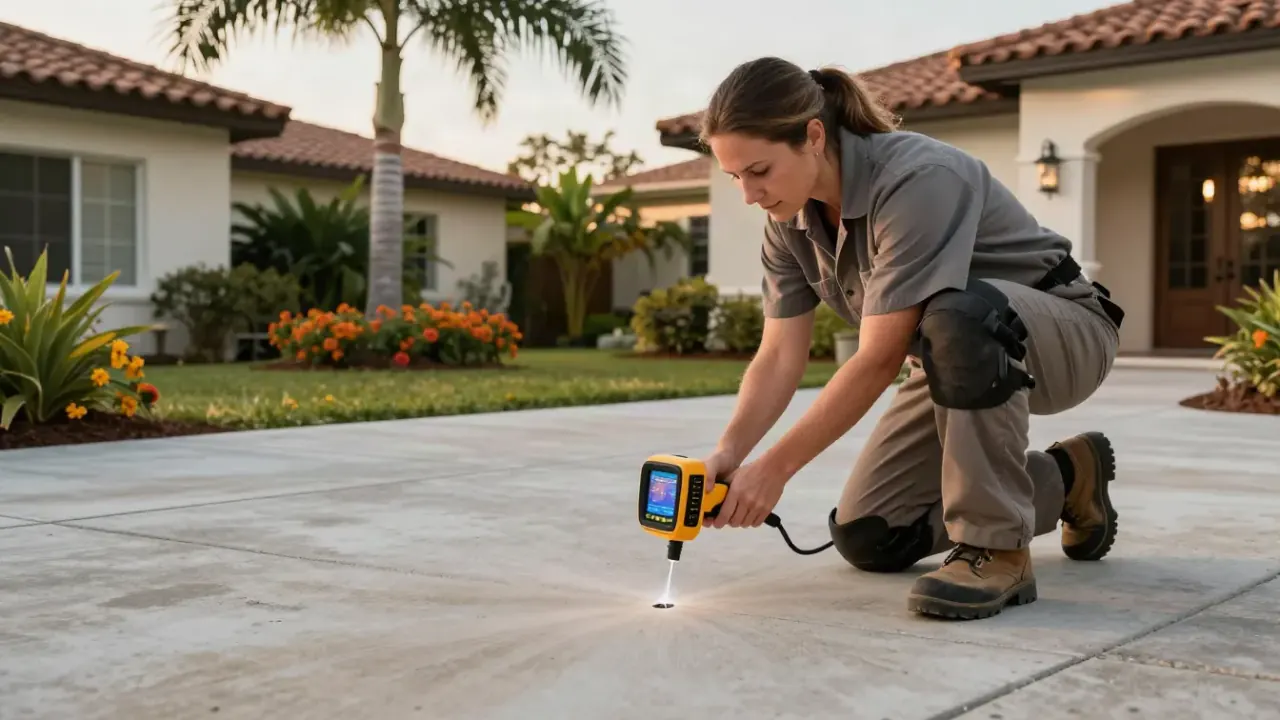
We place the microphone on the ground over the line and listen for the hiss of pressurized water escaping the pipe. The sound gets louder as we approach the break.
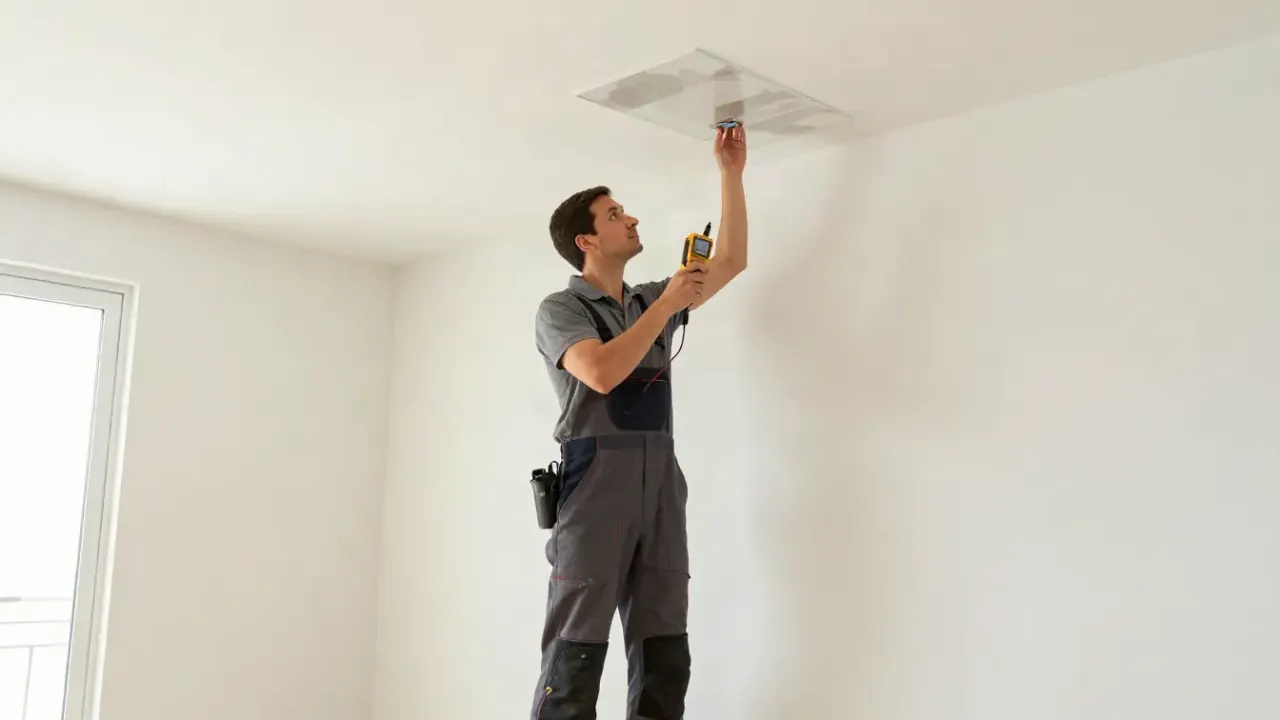
The thermal camera shows temperature differences in the soil where water is moving or pooling. It confirms the acoustic reading and helps us see the leak path.
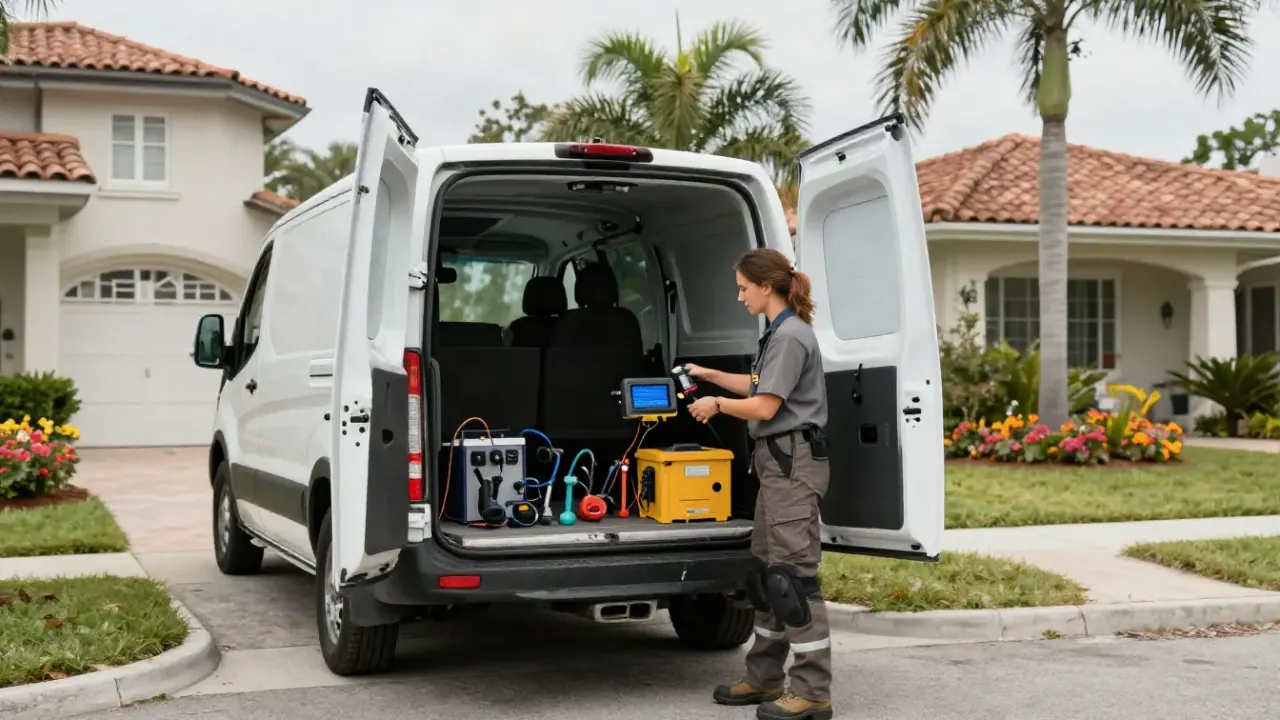
We use these to map the exact path of the service line from the meter to the house. Knowing the path keeps the search narrow and the repair trench small.
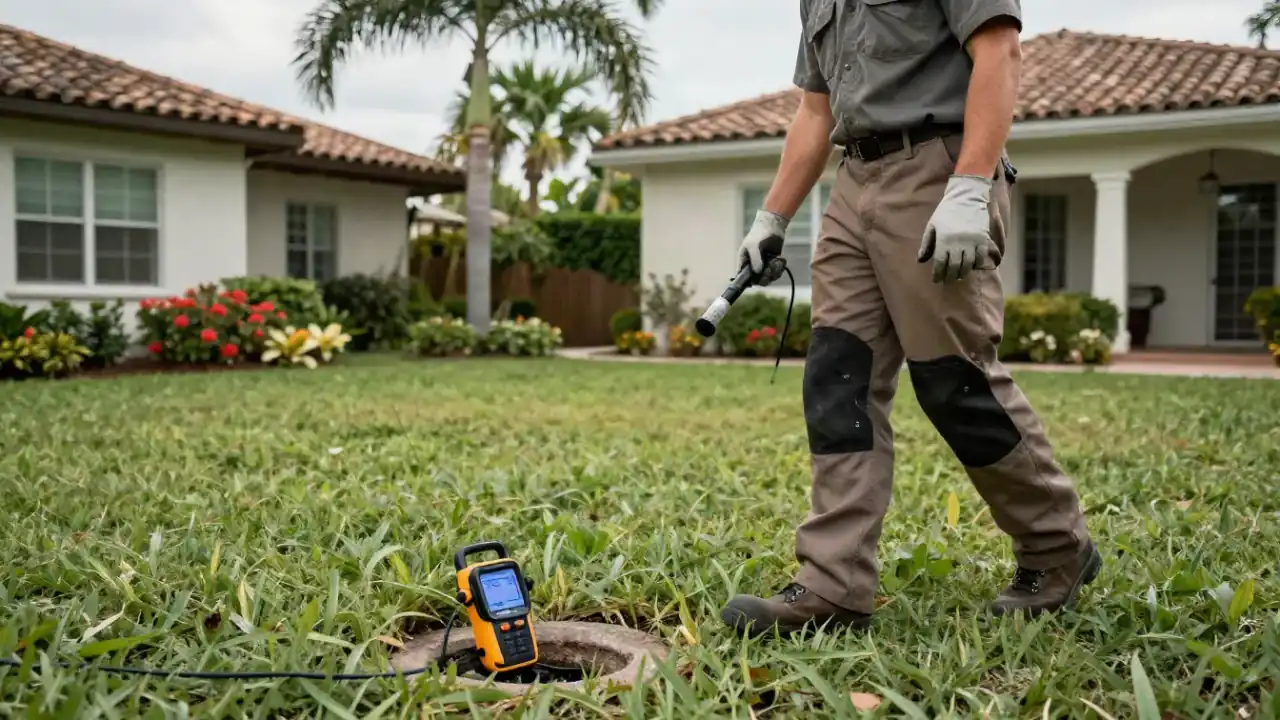
For lines under concrete or in difficult soil, we introduce a safe tracer gas into the pipe and detect where it escapes. This works when acoustic readings are unclear.
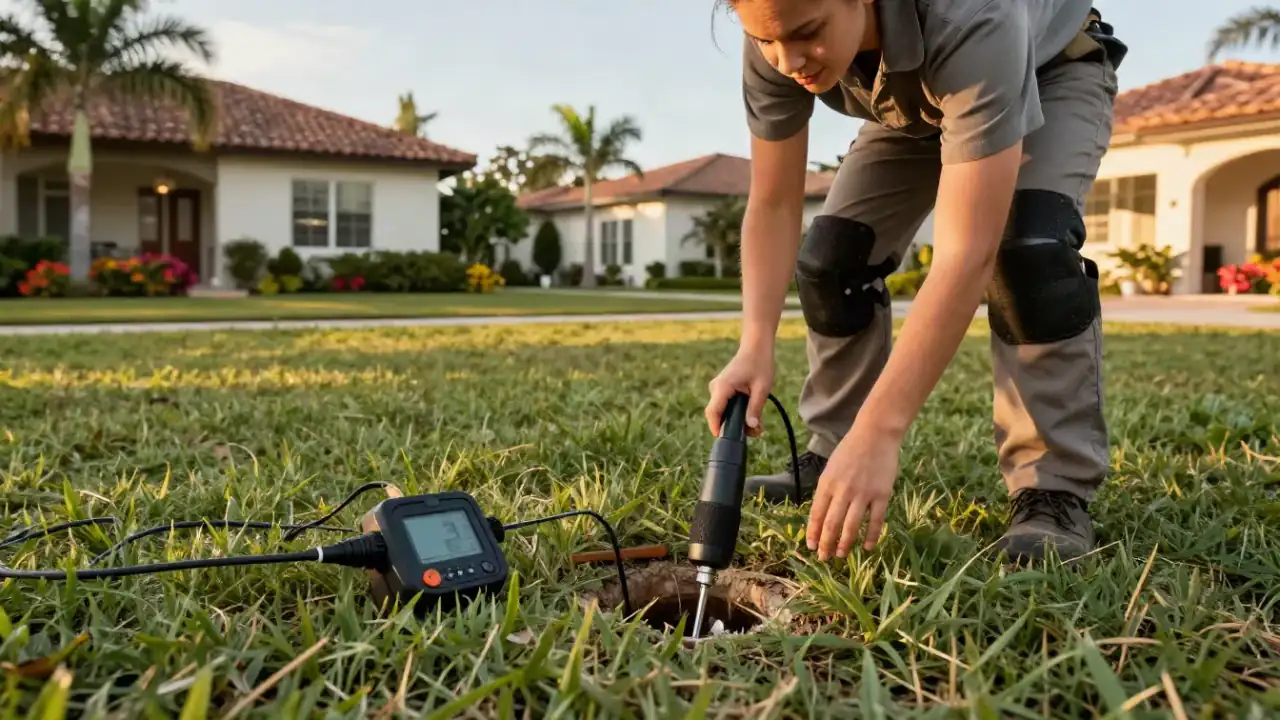
We isolate the service line and pressurize it to confirm the leak is underground. A dropping gauge tells us the line is losing water before we sweep.
Thermal views are illustrative, generated from the photographs.
When the leak shows up inside as a ceiling or wall stain, moisture meters help us trace the water back to its source and rule out the service line.
If the wet spot smells like sewage, we run a camera down the sewer line to check for breaks or root intrusion. That confirms which line is actually leaking.
We shut off every fixture and valve inside the house, then watch the meter's low-flow indicator. If it spins, the leak is on the pressurized side. If it stops, the leak is on a drain line. This one test tells us where to focus.
We take acoustic readings at multiple points along the line and compare the signal strength. The loudest reading is closest to the break. We confirm with a second pass from the opposite direction before marking.
We never mark a leak on one tool alone. The thermal camera has to show a moisture signature where the acoustic device hears the leak. When both agree, we mark. That cross-check keeps false positives low.
For breaks under driveways or slabs, we inject a safe tracer gas into the isolated line and scan the surface with a detector. The gas escapes at the break point, giving us a precise mark even through concrete.
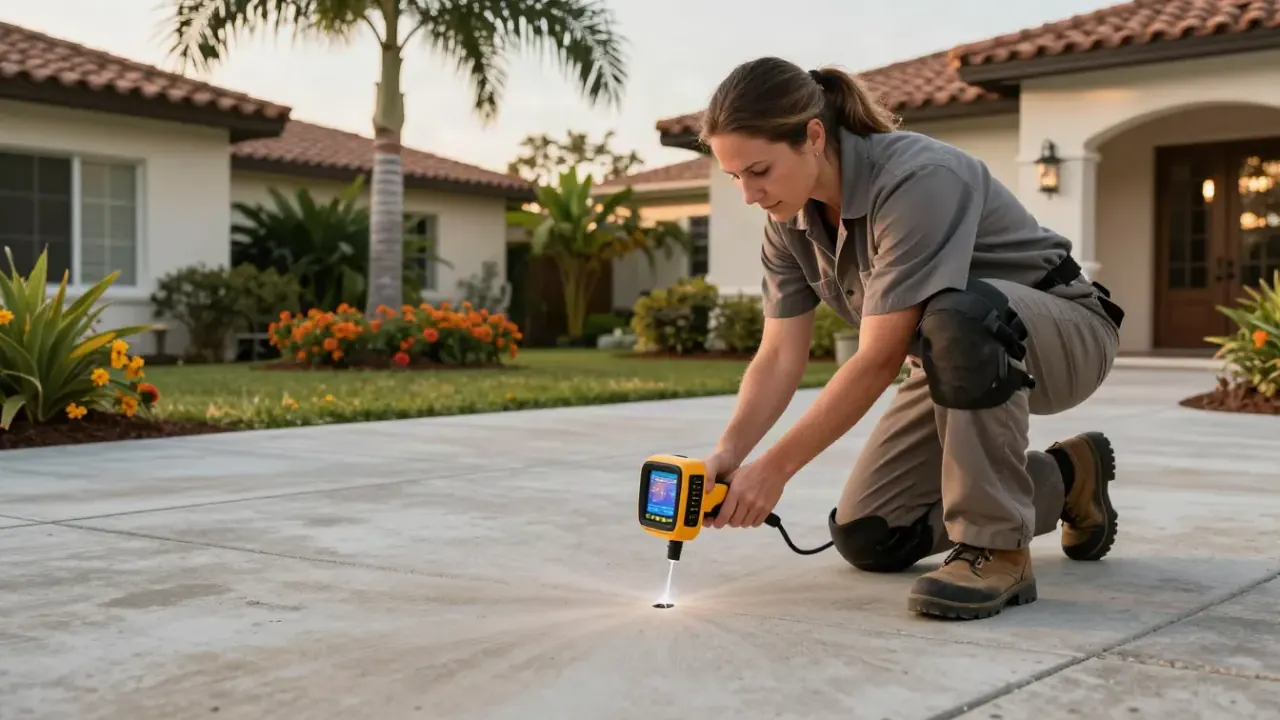
We test the meter with the house shut off, then sweep the service line with acoustic and thermal gear. If the break is underground, we mark it and give you a written report with the depth and pipe material.
Outcome: You know exactly where the leak is and what it will take to fix it. No more guessing, no more watching the bill climb.
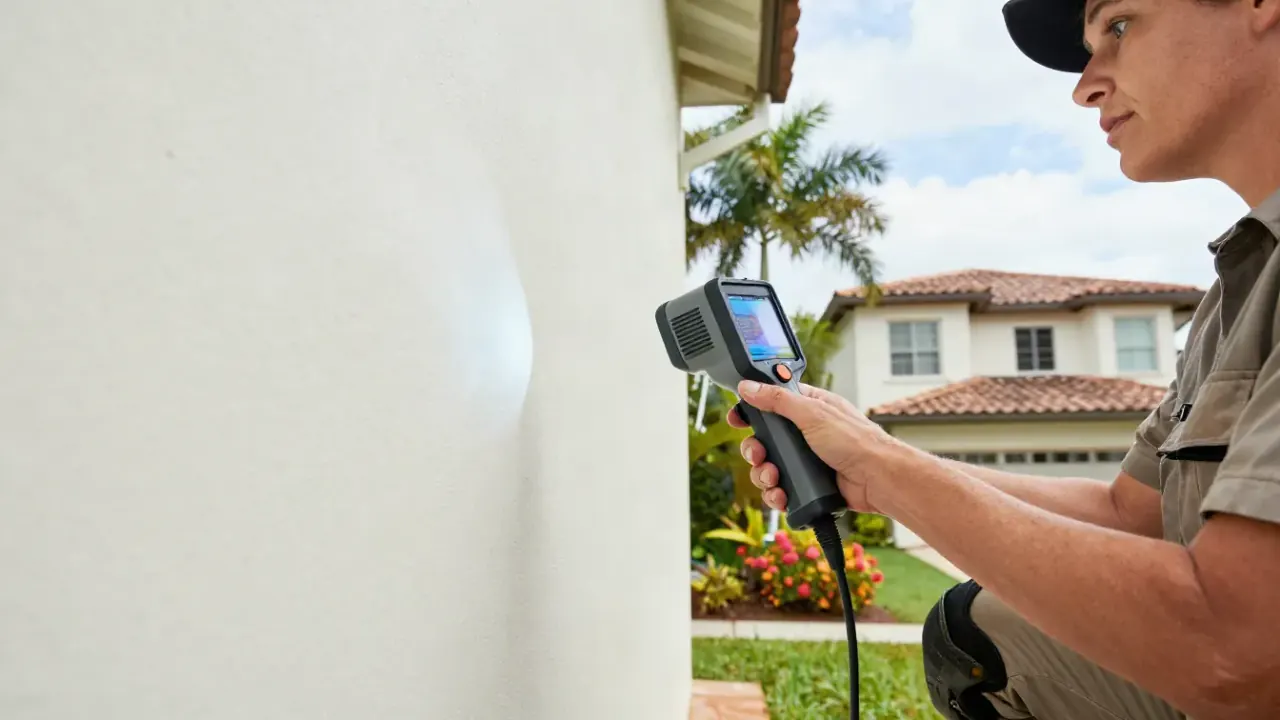
Your neighbor had a service line leak and you want to check yours before it fails.
We run a preventive pressure test and meter check, then sweep the line with acoustic gear to listen for early-stage pinhole leaks. Copper pipe often hisses before it actually breaks.
Outcome: You catch a failing line before it floods your yard or spikes your bill. Early repair is almost always cheaper than emergency repair.
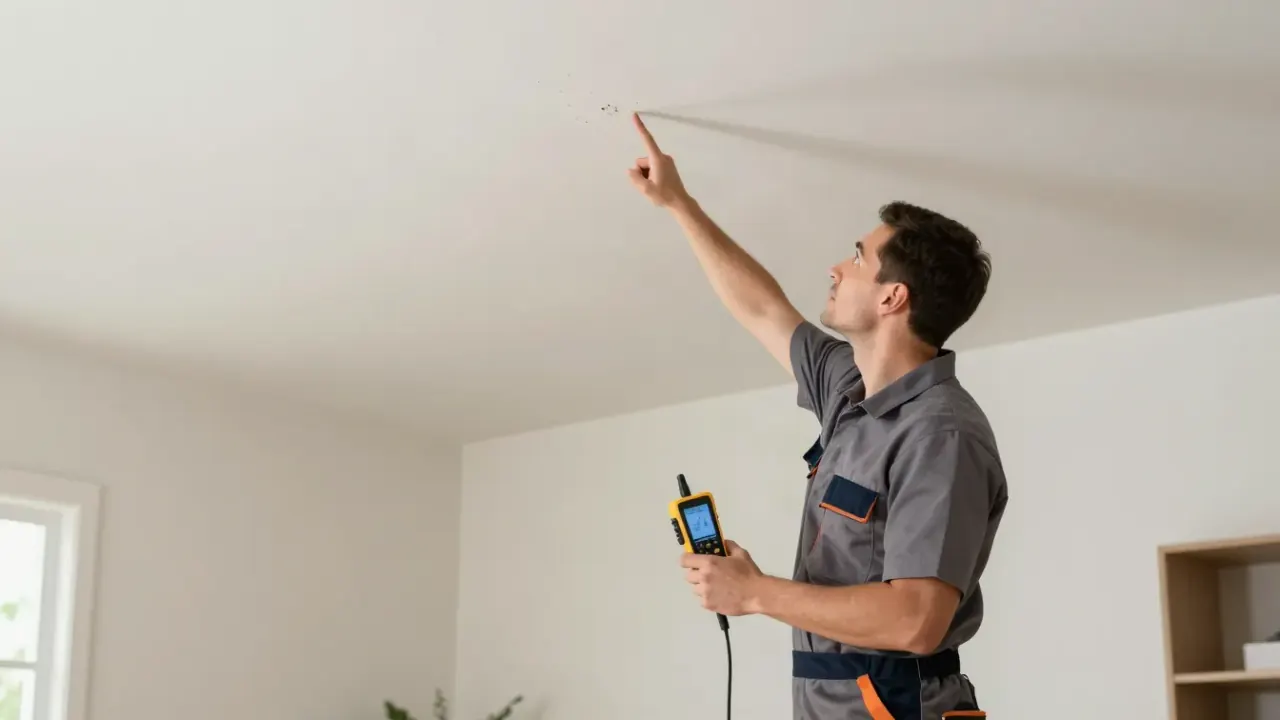
You are buying a Wellington home and the inspection flagged possible underground water loss.
We perform a full service line leak location and document the findings with photos and a written summary. The report is specific enough to use in negotiation or to plan the repair.
Outcome: You know whether the service line is sound before you close. That protects you from inheriting a buried problem.
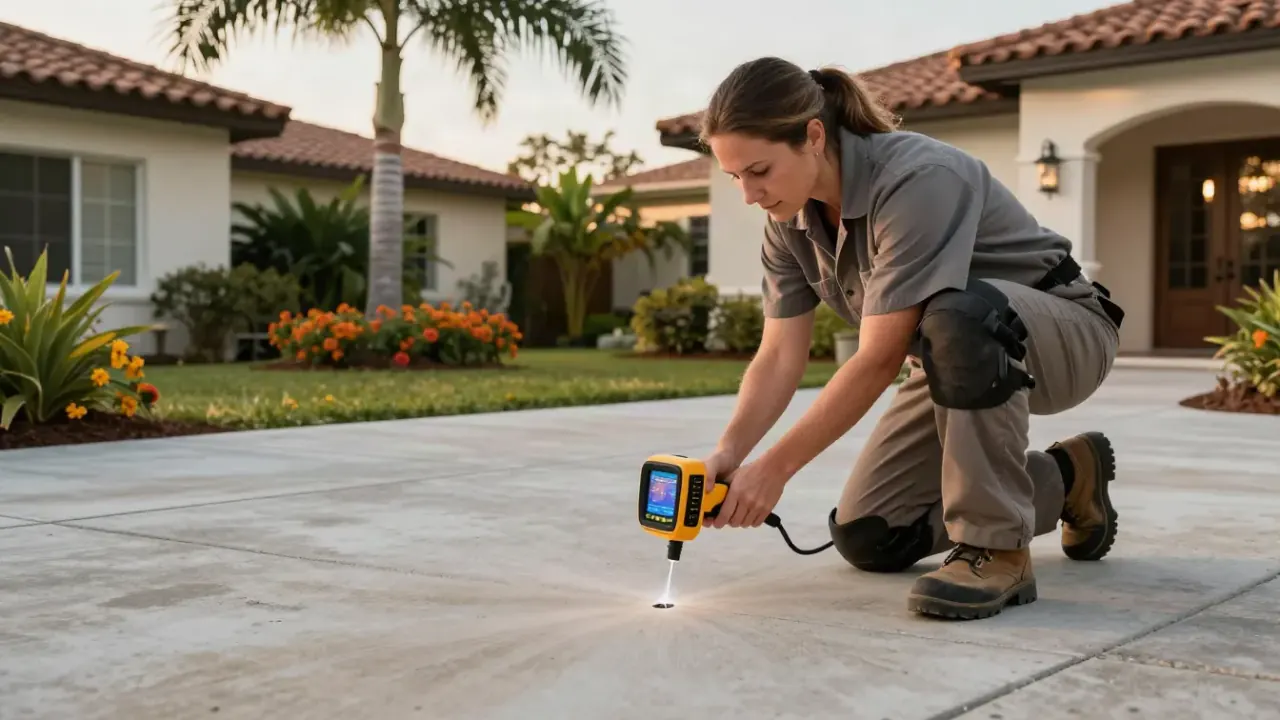
A contractor is ready to repair but does not know where to dig.
We locate and mark the leak, flag the line path, and hand over the report. Your contractor digs one hole in the right place instead of trenching the whole run.
Outcome: The repair happens faster, costs less, and does less damage to your landscaping and hardscape.
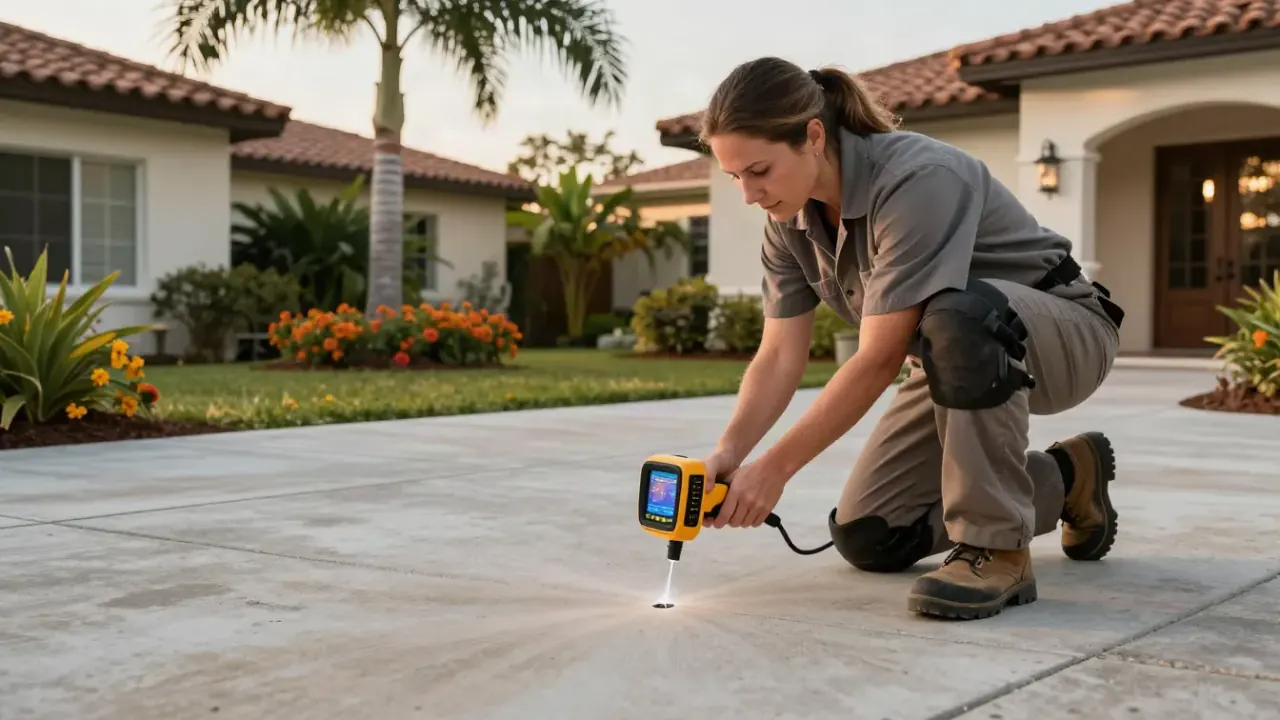
Your irrigation system is losing pressure and you are not sure if it is the service line or the sprinklers.
We isolate the irrigation system from the domestic line and pressure test each separately. If the meter still spins with the irrigation off, the leak is on the service line.
Outcome: You fix the right system. No paying to repair a service line when the real problem was a broken sprinkler zone.
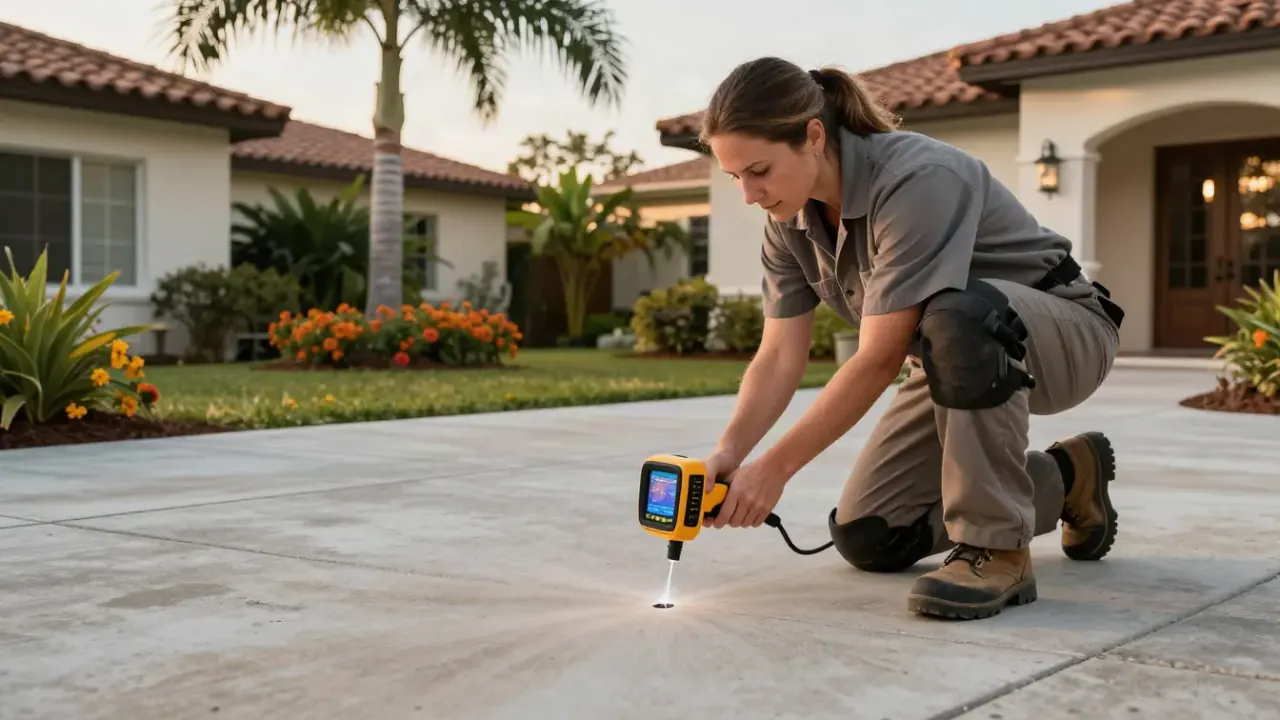
Wellington's sandy soil and high water table change how service line leaks behave. Water moves fast through sand, so a break near the meter box can show up as a wet patch 10 feet away. We account for that by sweeping the full line, not just the wet spot. Most homes here were built between 1985 and 2005 with copper pipe, and that original copper is now the most common failure point.
Pinhole leaks in copper pipes form on the hot side first, but service lines fail on the cold side too. Our wet season from June through October raises the water table, which puts more pressure on buried lines and can make an existing leak worse. If you need water service line leak detection in Wellington, Florida during the rainy months, expect faster soil saturation and bigger wet spots.
We also work with the Village of Wellington utility department on meter reads when a high bill needs verification. For homes on well water, the line materials and failure patterns differ, and we adjust our methods accordingly.
Before: The meter was spinning with everything shut off. The yard looked dry, and two plumbers had already told them the line was fine.
After: We swept the line with acoustic gear and found a pinhole leak in the original copper about 40 feet from the meter. We marked the spot, and the repair crew opened a 3-foot trench.
We recommended a pressure test every two years on the remaining original copper. Keeping house pressure under 80 PSI slows pinhole formation and extends the life of the line.
Before: A homeowner in Olympia had water bubbling up at the edge of the driveway. Two contractors wanted to cut a 20-foot section of concrete to find the break. The homeowner called us for a second opinion before agreeing.
After: We used a tracer gas leak detector and acoustic correlation to pinpoint the break within 8 inches. The repair crew cut a 2-foot square instead of 20 feet. The driveway was patched the same day.
We marked the line path with paint and left a photo record. If the line fails again, the next crew knows exactly where to look and can avoid exploratory cutting.
Before: A property manager at Isles at Wellington was told the service line was leaking because the meter kept spinning. The HOA was ready to authorize a full line replacement on two units. The bill was climbing and no one could find the break.
After: We isolated the irrigation system from the domestic line and found both leaks were broken sprinkler zones, not service lines. The meter stopped spinning once the irrigation valves were closed. The HOA saved the cost of two unnecessary line replacements.
We recommended a quarterly irrigation check and a separate shutoff valve for the sprinkler system. That makes it easy to isolate the irrigation from the domestic line in the future.
Most service line leaks announce themselves in one of a few ways. Here are the problems we hear about most from Wellington homeowners, and how we solve them.
One marked spot means one small trench and no wasted digging.
We mark the leak within 12 inches, so the repair crew opens one small trench instead of trenching the whole run. That saves you hundreds in sod replacement and irrigation repair.
A pinhole leak in a copper service line can waste 10,000 gallons a month. At Wellington utility rates, that is real money. Locating the leak fast caps the loss.
Underground water service line leaks saturate the soil next to your slab. Over months, that moisture can shift soil and crack stucco. Finding the leak early keeps water away from the structure. We check the slab edge and the meter box area on every call.
We use tracer gas leak detectors and ultrasonic leak detectors to confirm the break before we mark it. That means no exploratory jackhammering in your driveway and no torn-up flower beds. You get a marked spot and a clear explanation of what failed.
What a written scope covers and what shapes it. Prices are set by the business after the first look.
Included
Depends on
Clear records you can keep and share.
Location, depth, and pipe material
Thermal and acoustic readings
Marked path from meter to house
Flat-rate if you want us to fix it
Location finds the break without digging. Repair exposes and fixes it. Knowing the difference keeps your yard and wallet intact.
No-dig diagnosis from the surface
Dig, cut, and couple new pipe
Full line swap for failing pipe
A list like this tells people straight away whether you cover their street. Not listed? Call and ask: it only takes a minute.
Based in Wellington and covering the places around it. Pick one for local details.
We shut off the house, confirm the meter is spinning, then sweep the line with acoustic listening devices and a thermal imaging camera. An electromagnetic pipe locator maps the line path. When the acoustic hiss and the thermal signature line up, we mark the spot. Most residential jobs take 60 to 90 minutes.
The two biggest causes here are pinhole leaks in copper pipes and root intrusion on older PVC pipe. Wellington's sandy soil shifts with our wet and dry seasons, which stresses buried lines. High water pressure above 80 PSI also accelerates failures. Homes built before 2005 with original copper are the most common callers.
Driveway crossings and long runs cost more. We quote flat-rate before we start, and the fee is credited toward the repair if you have us do the work.
No. Location is no-dig, but the repair itself requires exposing the pipe. We mark the exact spot so the trench is small, usually 3 to 4 feet long. Some epoxy pipe sealant products exist for temporary patches, but a proper repair means cutting out the failed section and coupling in new pipe.
Other services from the same team.
If your meter is spinning and your yard is soggy, every day costs you water and money. We are local, we answer the phone, and we can usually be there the same day. Call (561) 760-4218 and we will find the leak.
Call us at (561) 760-4218 or email info@wellingtonleakdetection.com. Most inspections are scheduled same-day or next-day. We serve Wellington and all of Palm Beach County.