For Homes
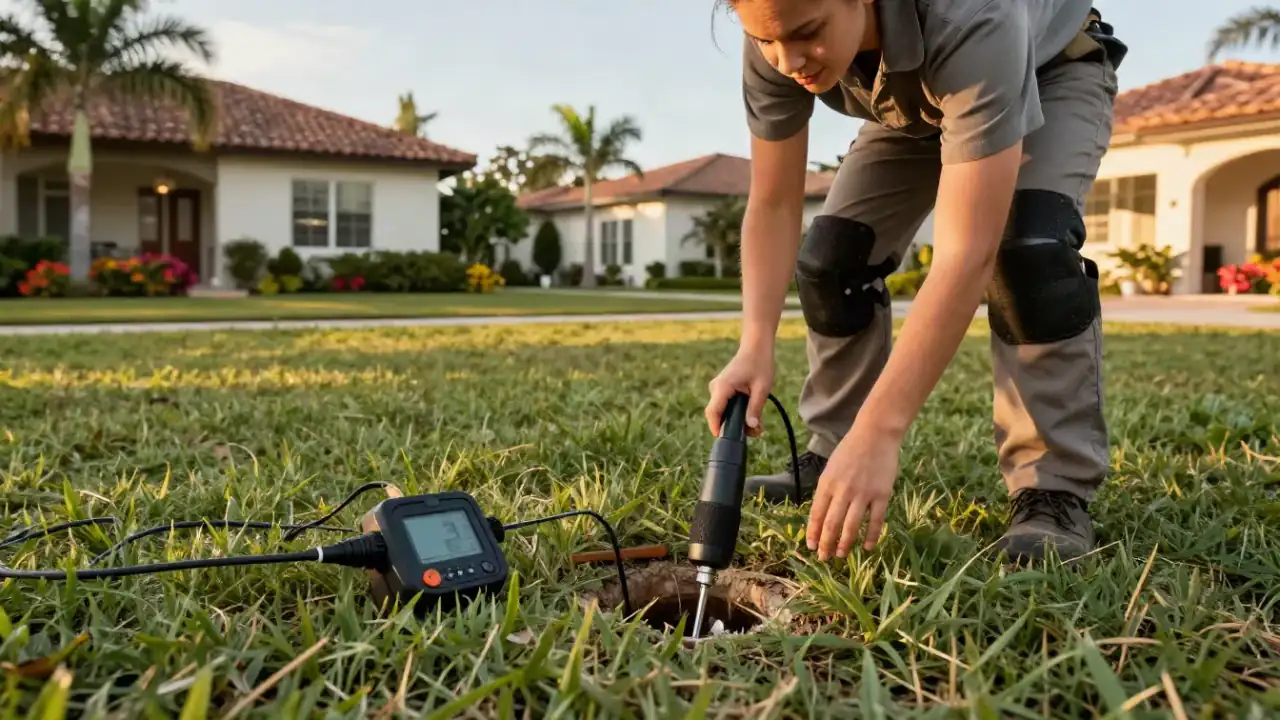
We find buried leaks on service lines, irrigation mains, and pool plumbing. You get a marked spot and a report before anyone digs.
- High water bill
- Soggy yard patch
- Running water sound
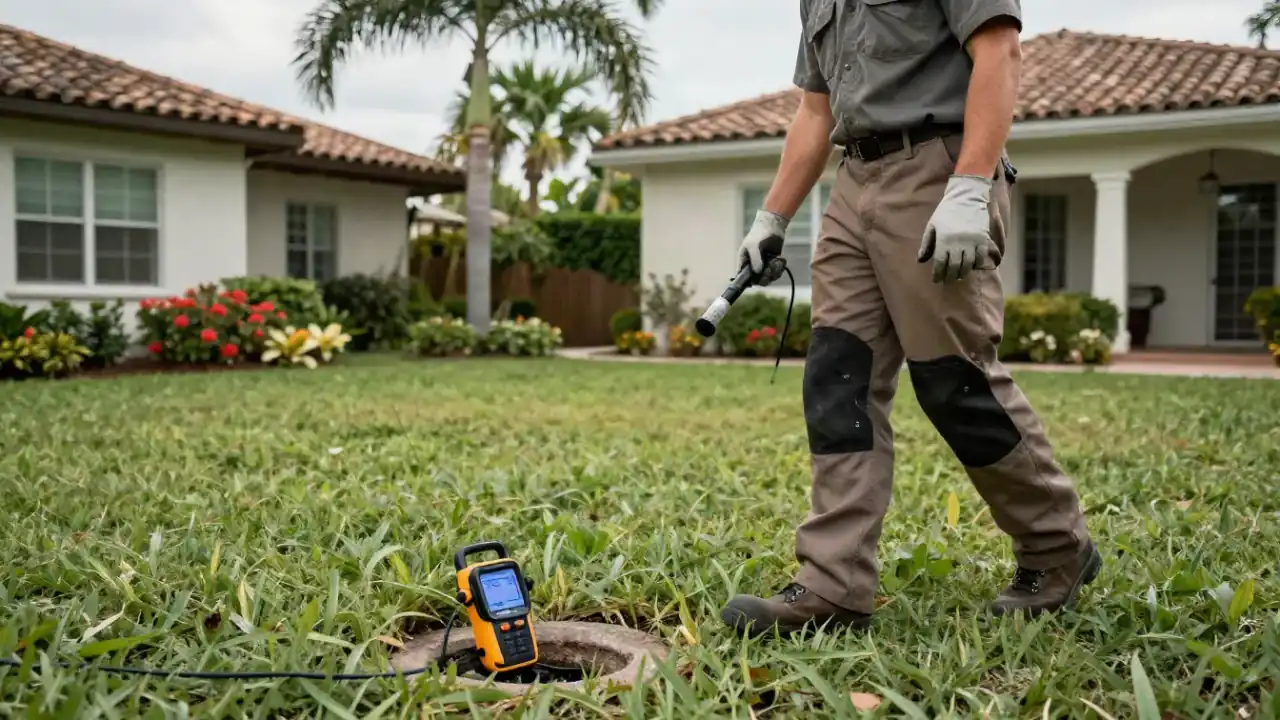
Underground Pipe Leak Location Wellington FL finds the exact break in your buried water, irrigation, or sewer line before anyone picks up a shovel. If your water bill jumped, your lawn has a soggy patch that never dries, or you hear water running when everything is off, we trace it with acoustic listening devices and thermal imaging cameras. We serve homeowners, equestrian properties, and commercial sites across Palm Beach County.
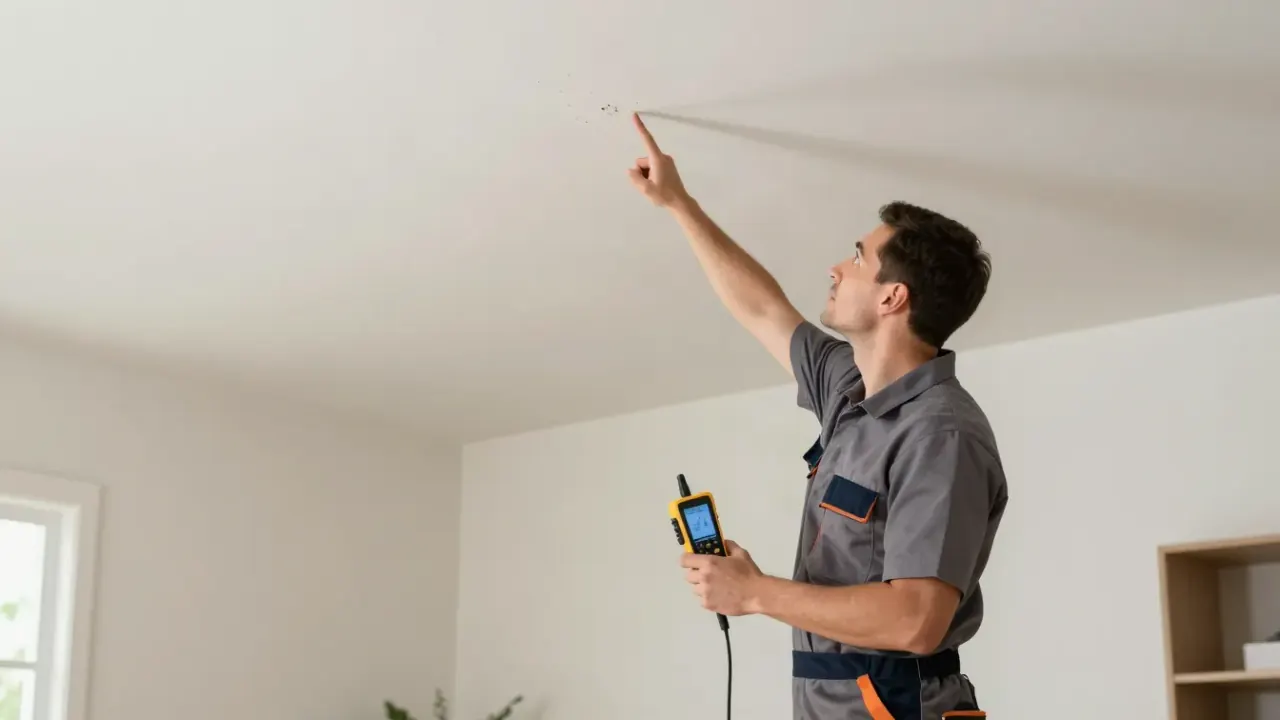 Pressure test linesAcoustic sweepMark the break
Every call gets the same core scope: isolate the lines, pressure test, sweep with acoustic and thermal gear, mark the leak, and hand you a written summary. Repair is quoted separately if you want us to handle it. Here is what is covered on a standard residential visit.
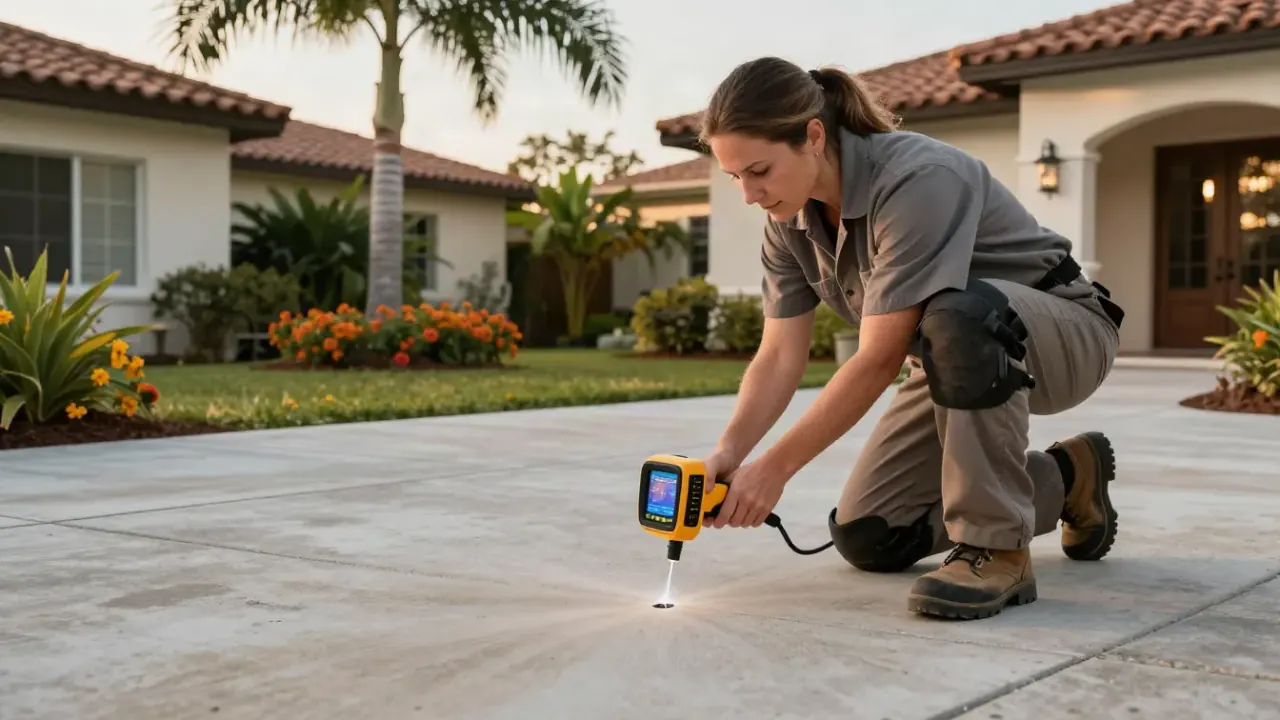
We shut down irrigation, pool, and domestic lines one at a time and pressure test each. This confirms which buried line is losing water before we walk the yard, so you are not paying us to chase the wrong pipe.
We walk the full pipe route with acoustic listening devices and an ultrasonic leak detector. On copper pipe and PEX tubing, the sound signature narrows the break to a two-foot window in most cases.
We verify hot spots with a FLIR thermal imaging camera. If the line is under a slab or the signal is weak, we introduce tracer gas and confirm with a Sewerin detector before we mark anything.
You get a painted or flagged mark at the leak, photos of the readings, and a plain-language summary of what failed. That report is what your plumber or insurance adjuster needs to move forward.
If you want us to handle the pipe leak repair, we quote it before we leave. We cut one opening, replace the failed section, and pressure test the line before backfilling. Most repairs are done in a single visit.
The approach is the same for a home and a business. What changes is the access, the schedule and who needs the paperwork.
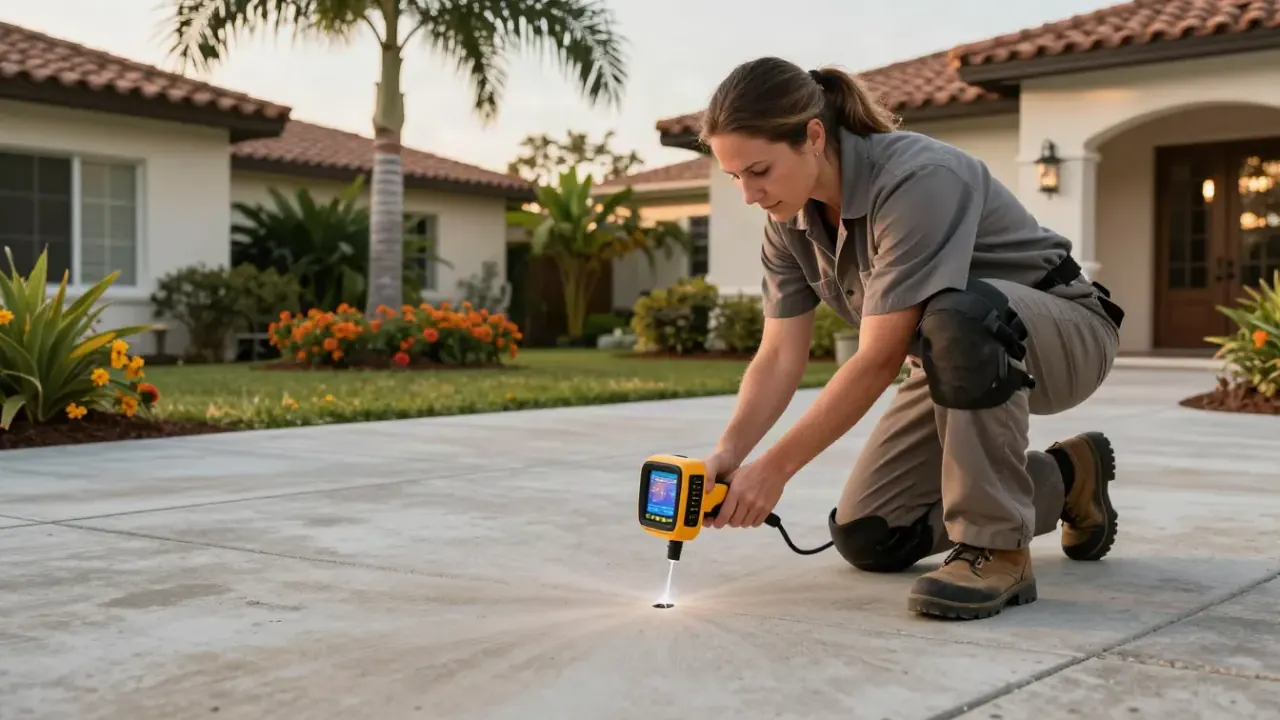
We find buried leaks on service lines, irrigation mains, and pool plumbing. You get a marked spot and a report before anyone digs.
We locate leaks on commercial service lines and irrigation mains without shutting down your operation. You get a marked plan for the repair crew.
A plain-language look at what Underground Pipe Leak Location involves and when it is needed.
See how it worksUnderground Pipe Leak Location Wellington FL is the process of finding the precise point where a buried pipe is losing water, using sound, pressure, temperature, and tracer gas instead of guesswork. We pressurize the line, walk the route with acoustic listening devices, and confirm the spot with thermal imaging cameras or a tracer gas leak detector. Once we mark it, we know whether it is copper pipe, PEX tubing, PVC pipe, or CPVC pipe before we open the ground. That saves you from exploratory digging that can run hundreds of dollars and destroy landscaping.
Most Wellington properties sit on sandy soil over a high water table, and that combination hides leaks well. A pinhole leak in copper pipes or a cracked fitting on an underground water service line can run for weeks before you see surface water. We get calls from homeowners in Olympia and Binks Forest whose first clue was a high water bill from hidden leaks. If you need underground leak detection near me and want an answer the same day, we schedule a full acoustic and thermal sweep.
We find the break before anyone digs, so you pay for one repair instead of a trench.
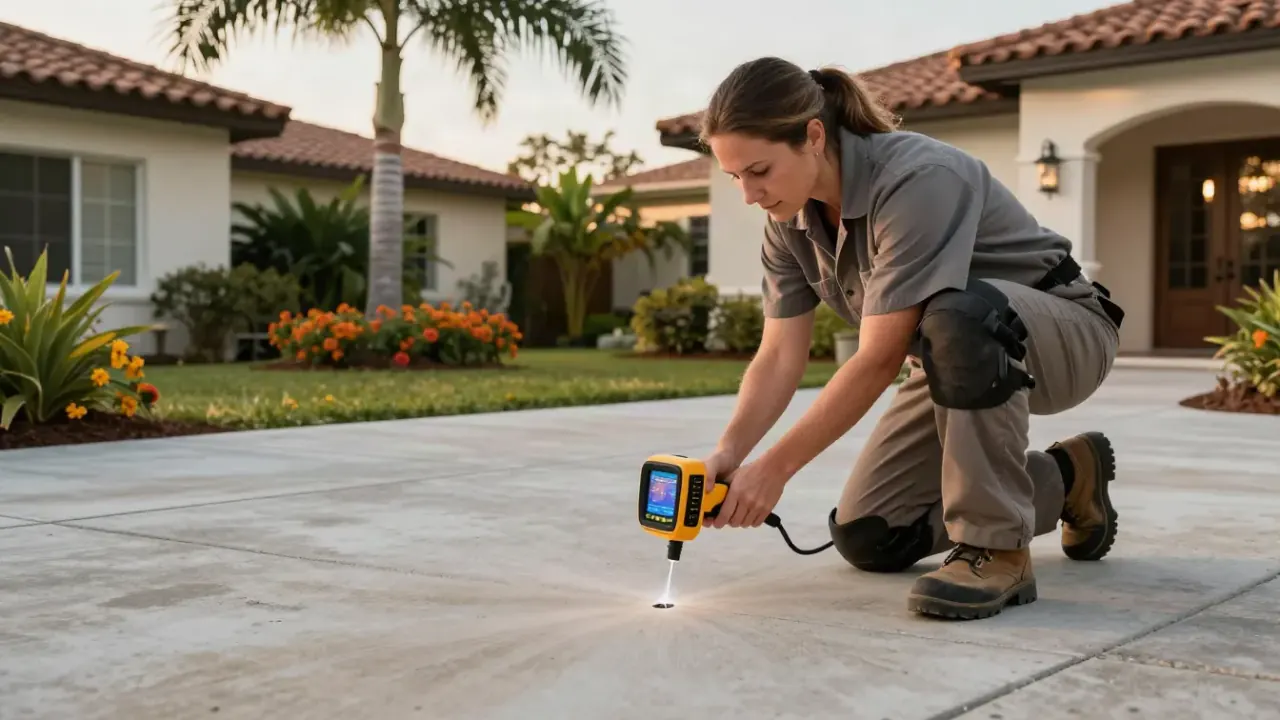
Five steps, one visit. Here is exactly what happens from the moment you call until we hand you the marked location.
We ask what you are seeing: high bill, wet spot, running sound, or low pressure. You send us a photo of your water meter if you can. That five-minute call tells us whether to bring acoustic gear, tracer gas, or both.
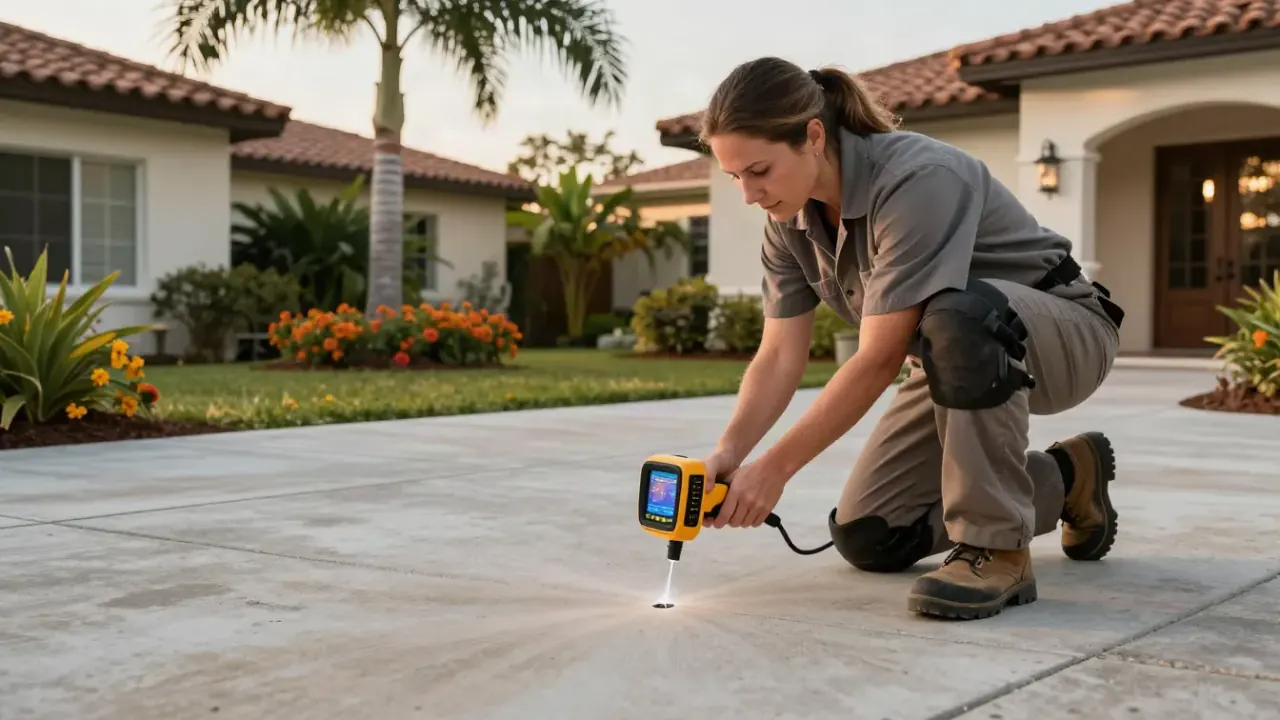
On arrival we isolate the irrigation, pool, and domestic lines and pressure test each one. This confirms which line is leaking before we walk the yard. Takes 20 to 30 minutes and rules out false alarms from irrigation timers.
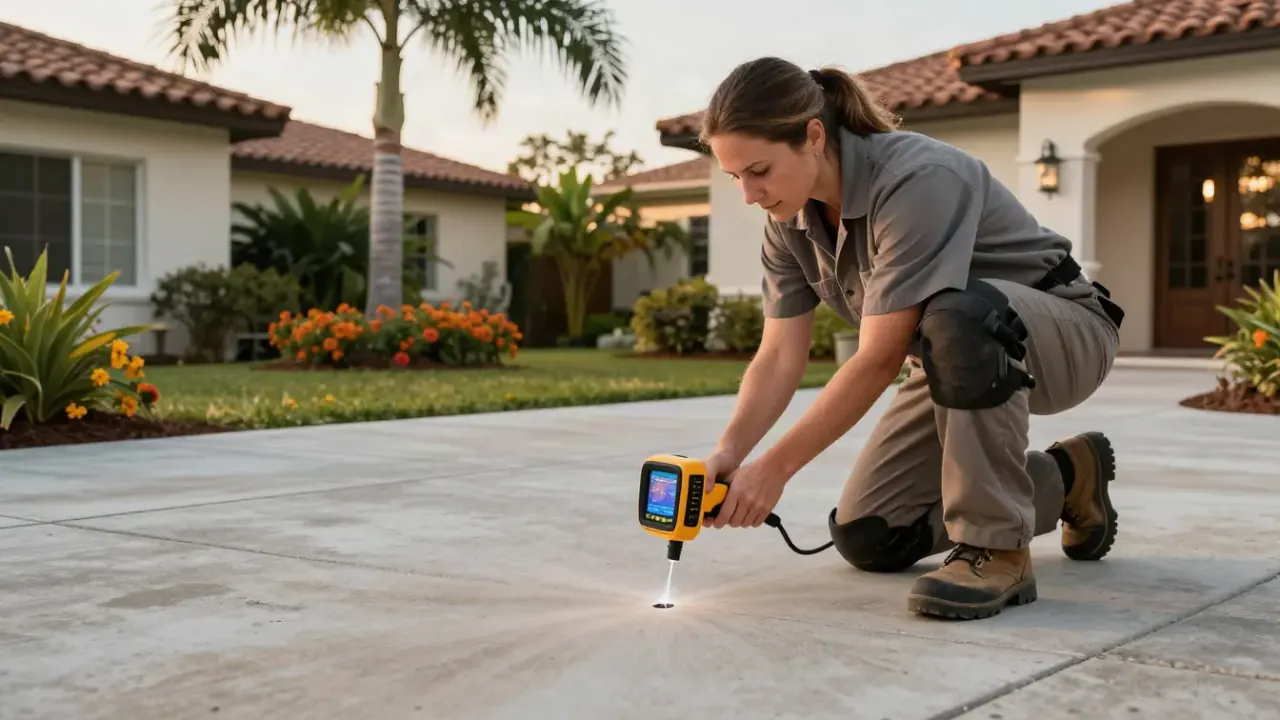
We walk the pipe route with acoustic listening devices and an ultrasonic leak detector, then verify hot spots with a FLIR thermal imaging camera. On copper pipe and PEX tubing, the sound signature is distinct enough to narrow the leak to a two-foot window.
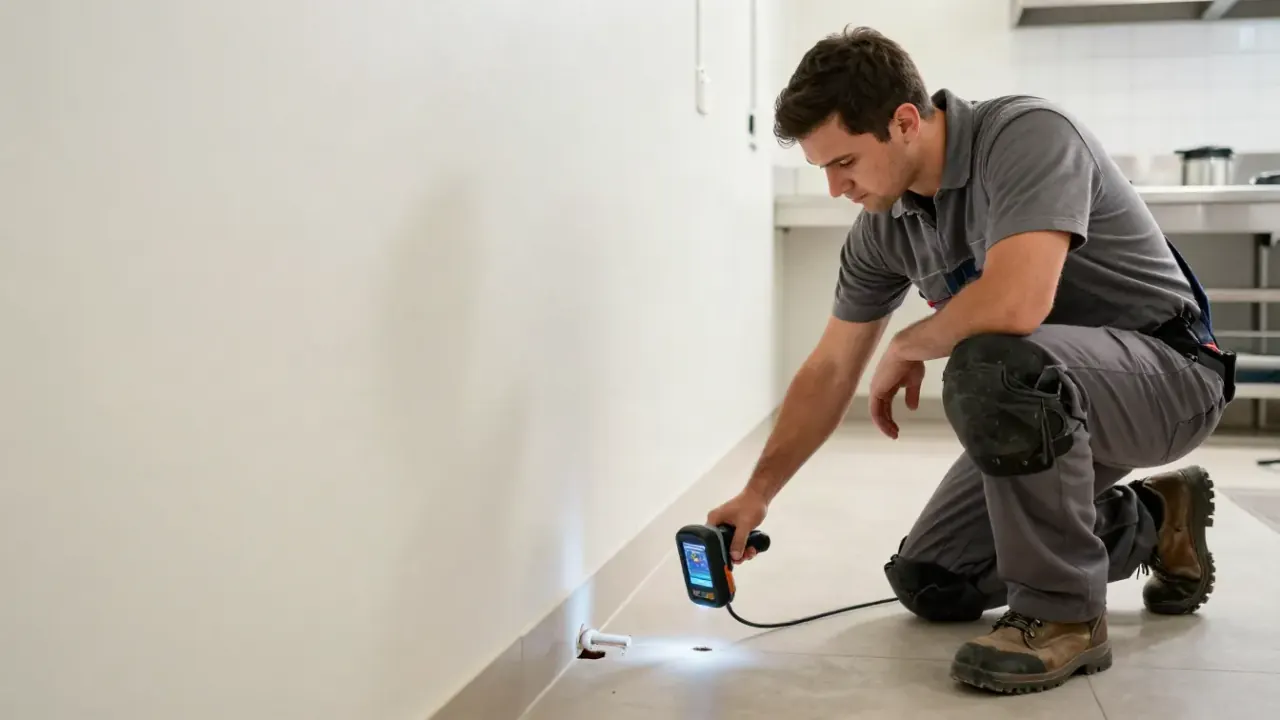
We paint or flag the location and, where soil allows, confirm with a moisture meter reading. If the line is under a slab or pool deck, we use a video pipe inspection camera or tracer gas to verify before anyone cuts concrete.
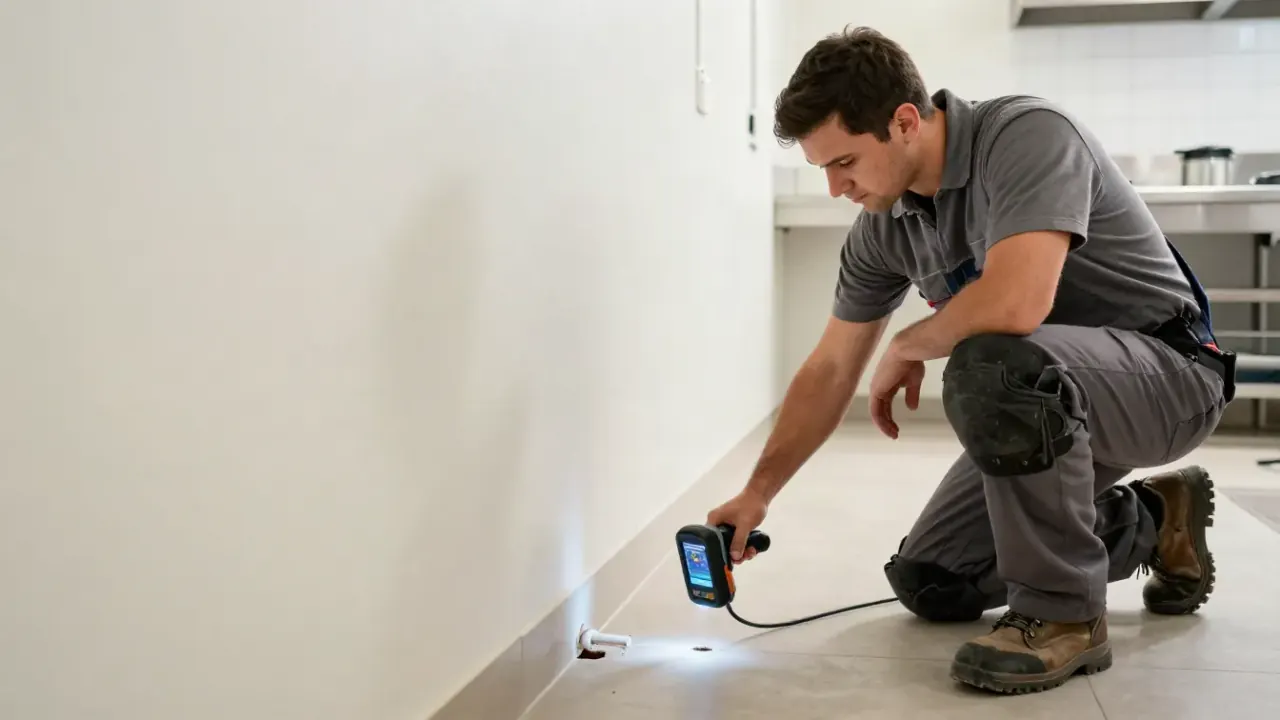
You get the marked spot, photos, and a plain-language summary of what failed and why. If you want us to handle the pipe leak repair, we quote it on the spot. If you use your own plumber, we hand off the location and you are done.
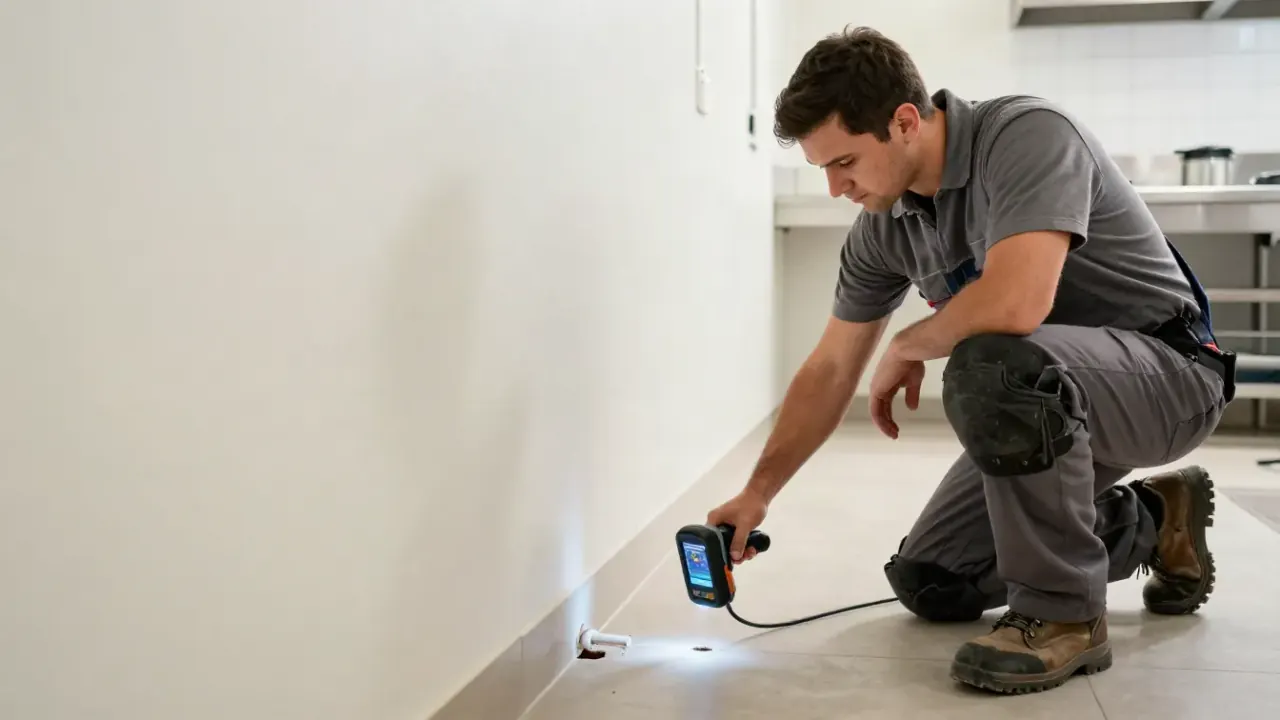
Move across a circle, or focus it and press Enter, for an illustrative thermal view of the photograph.
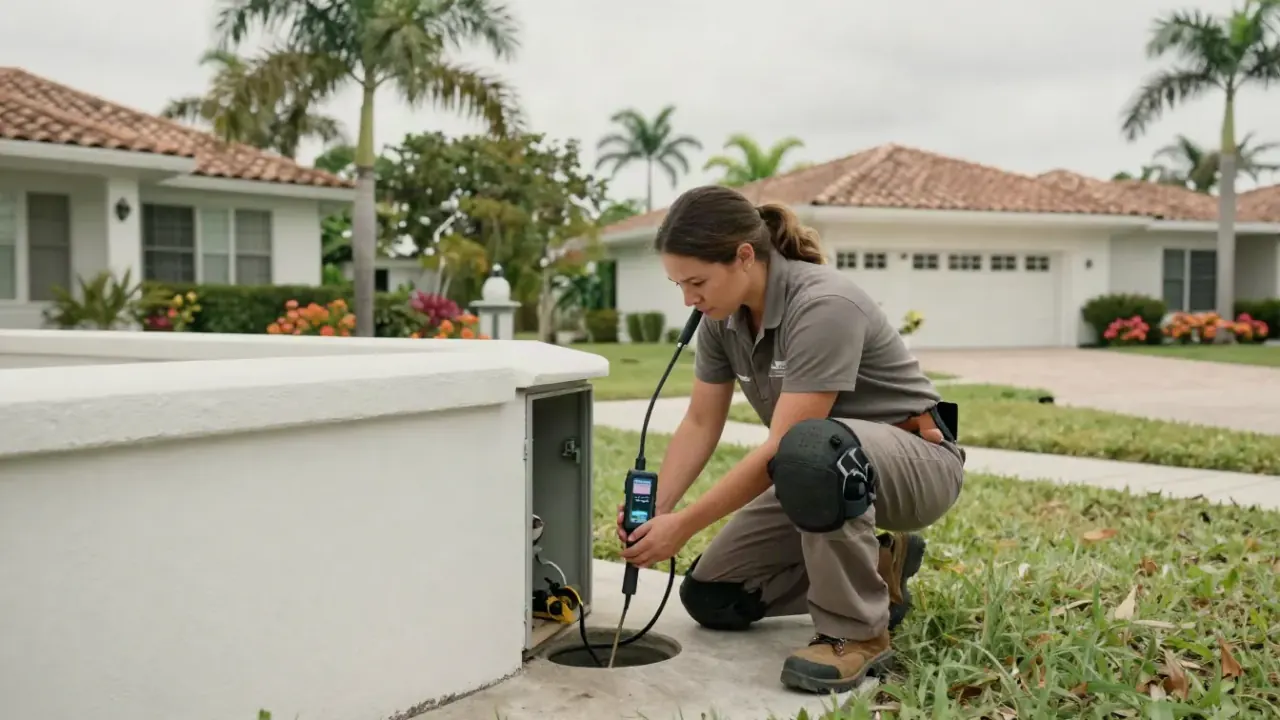
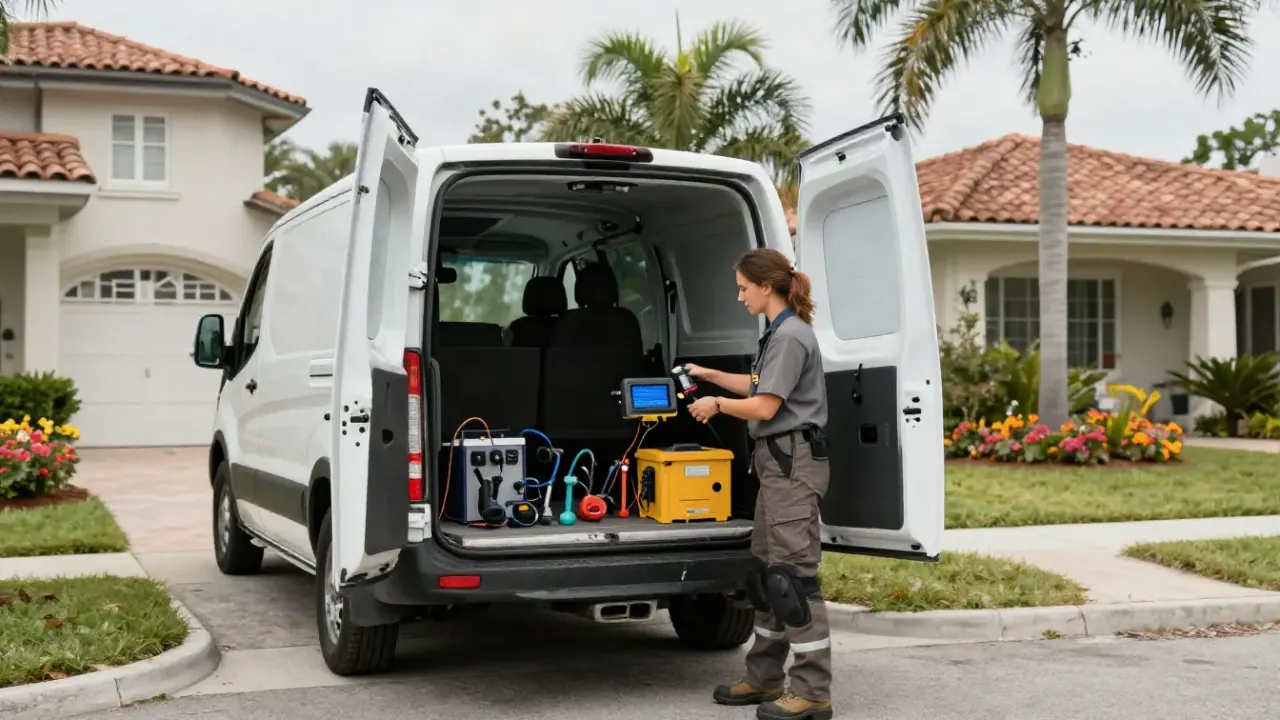
Ground microphones and listening discs pick up the sound of pressurized water escaping a buried pipe. We use these to narrow the leak to a two-foot window on most service lines.
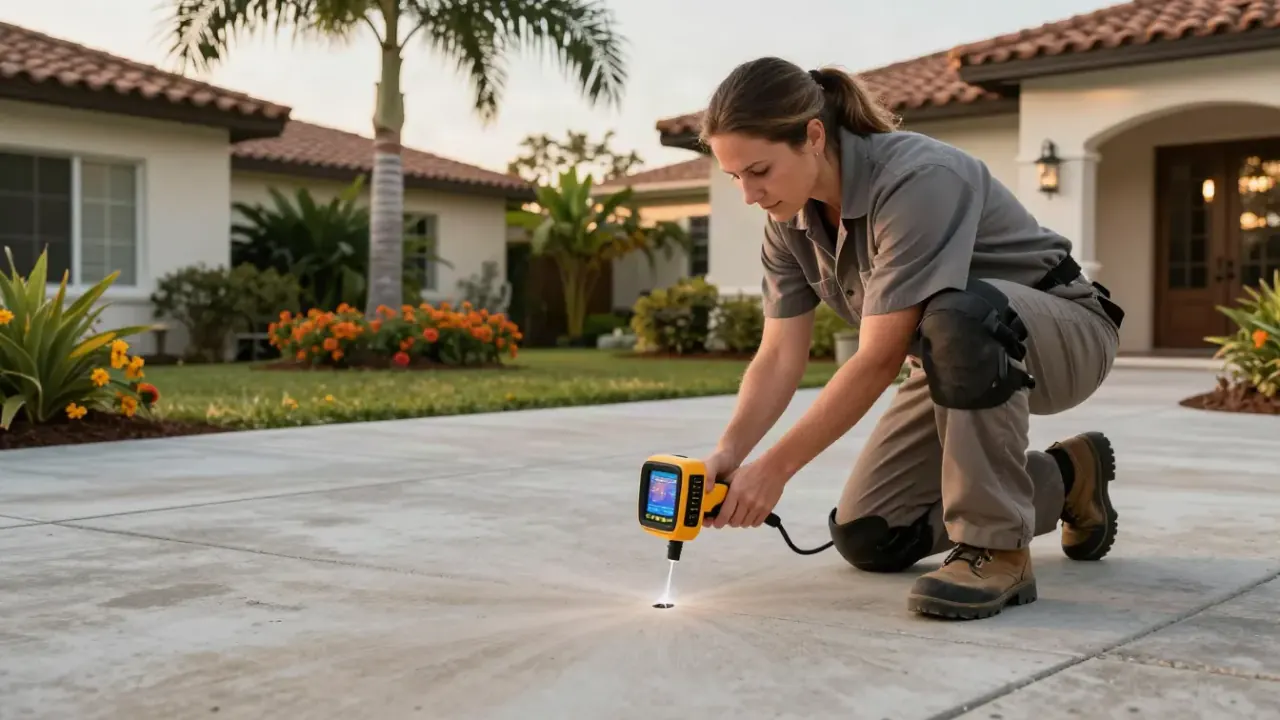
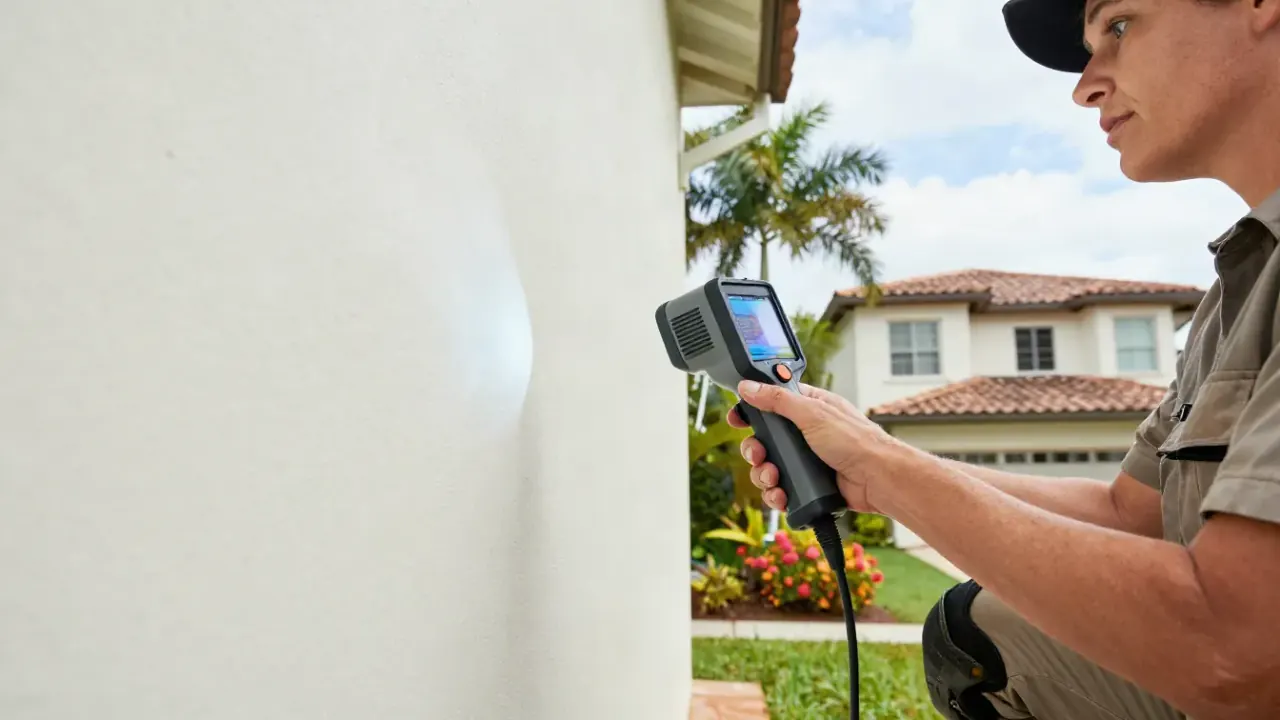
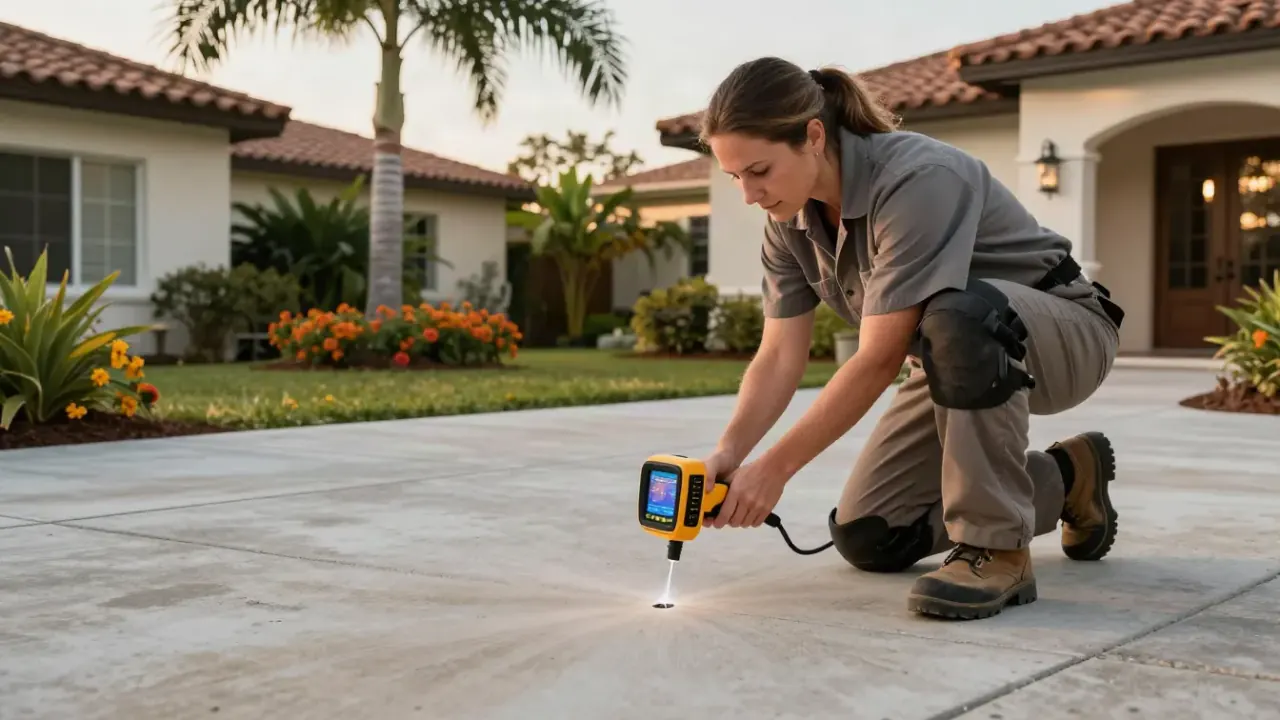
Thermal cameras show temperature differences where water is moving under soil or concrete. We use them to confirm acoustic readings and to trace leaks under slabs and driveways.
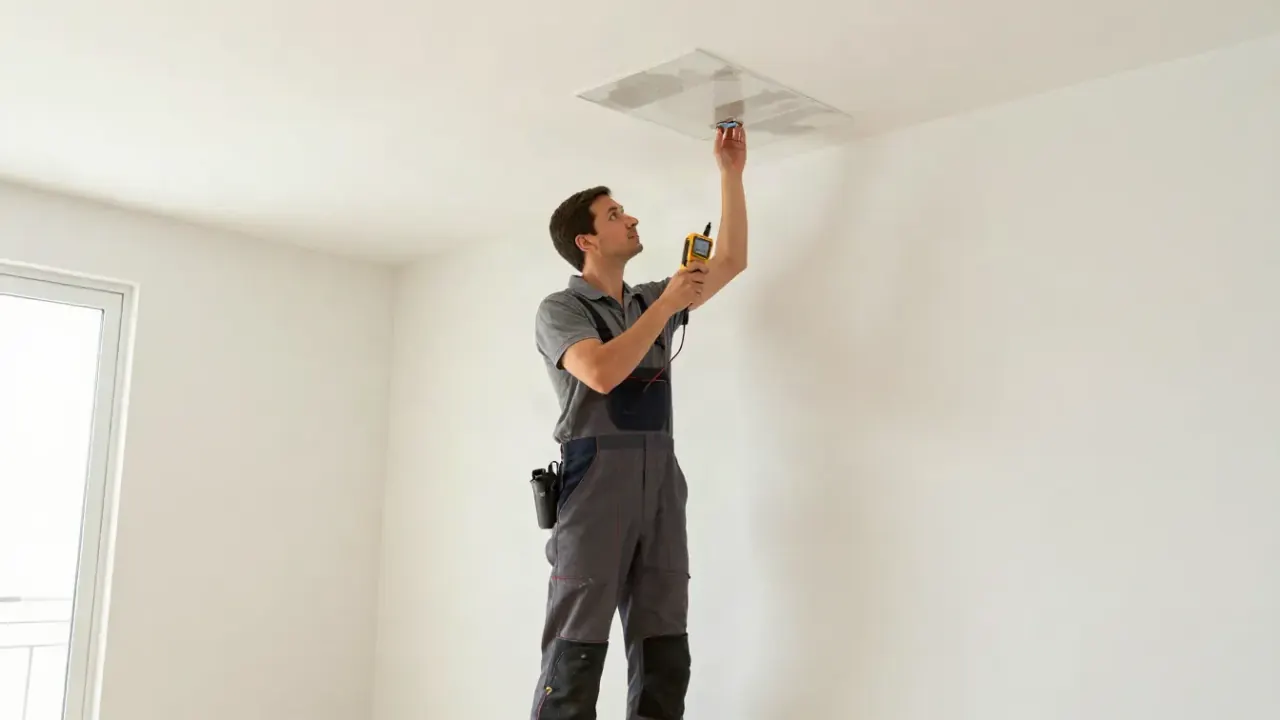
We introduce a safe tracer gas into the line and read where it escapes. This confirms the leak location when acoustic signals are weak or the pipe is deep.
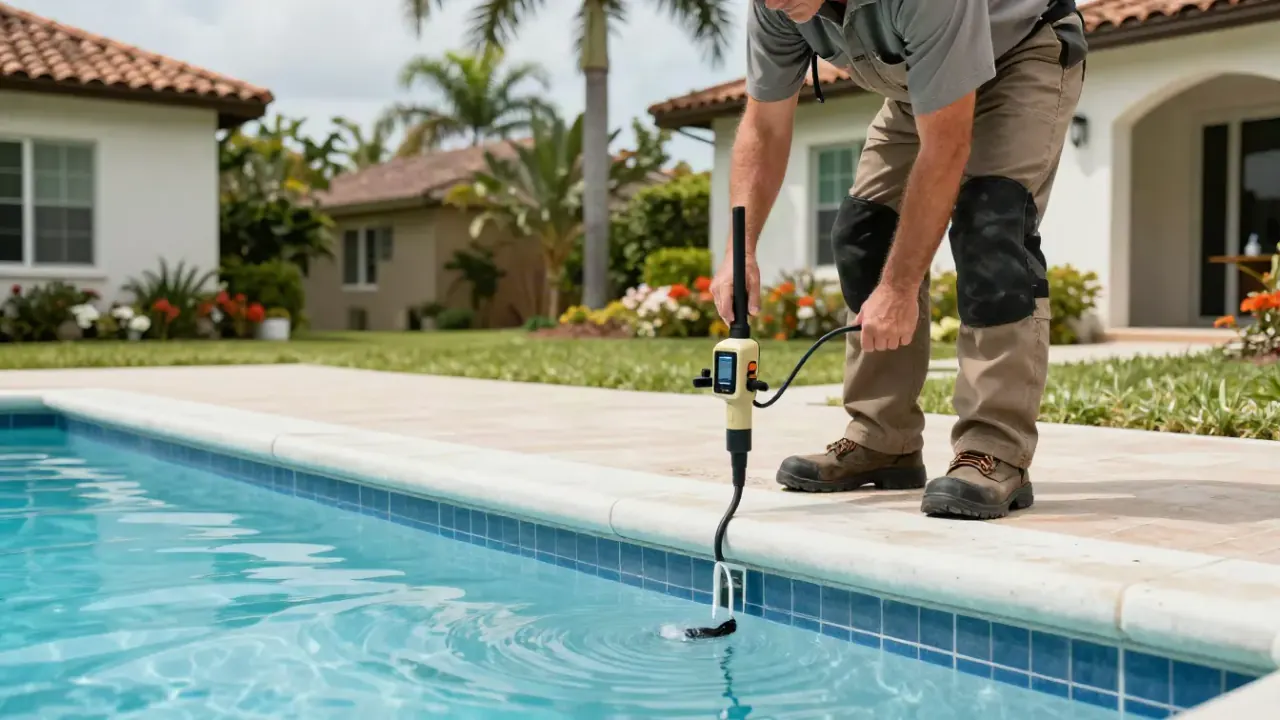
These map the exact route and depth of metal and tracer-wire pipes before we sweep. Knowing the route keeps us from chasing signals from other utilities.
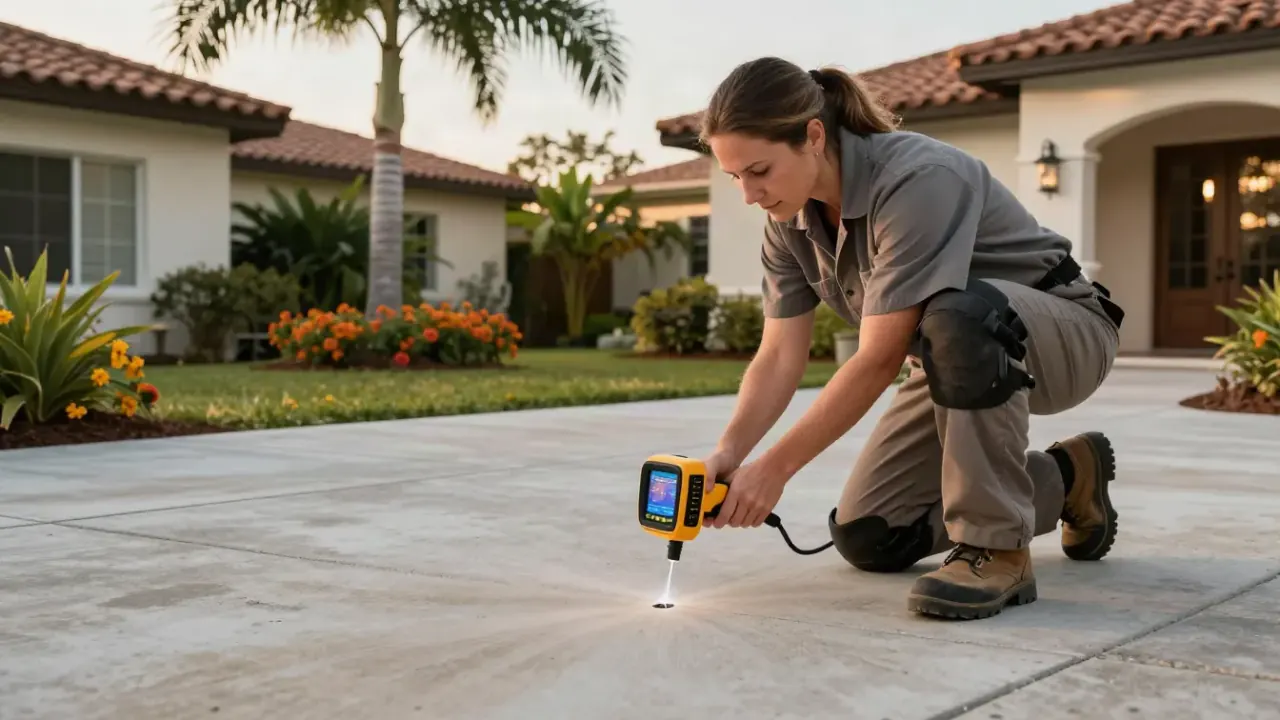
UEi and similar units pick up high-frequency sound that the human ear misses. They are especially useful on PEX tubing and small pinhole leaks in copper pipe.
Thermal views are illustrative, generated from the photographs.
A SeeSnake camera lets us look inside sewer and drain lines for root intrusion, cracked pipe, or collapsed joints that acoustic gear cannot see.
We read moisture content in soil and along slab edges to confirm how far water has traveled and to verify the leak location before marking.
We shut down irrigation, pool, and domestic lines one at a time and pressurize each. This tells us which buried line is leaking before we sweep the yard, and it rules out false alarms from irrigation timers or fixture drips.
Two or more listening points along the pipe route let us triangulate the leak. We compare signal strength and timing to narrow the break to a small window, then confirm with thermal or tracer gas before marking.
For deep lines or slab leaks, we introduce a safe tracer gas and read where it surfaces with a Sewerin detector. This method confirms the location when acoustic signals are ambiguous.
We identify whether the line is copper pipe, PEX tubing, PVC pipe, or CPVC pipe before recommending a repair. Material determines the repair method, from pipe repair clamps to epoxy pipe sealant or a full section replacement.
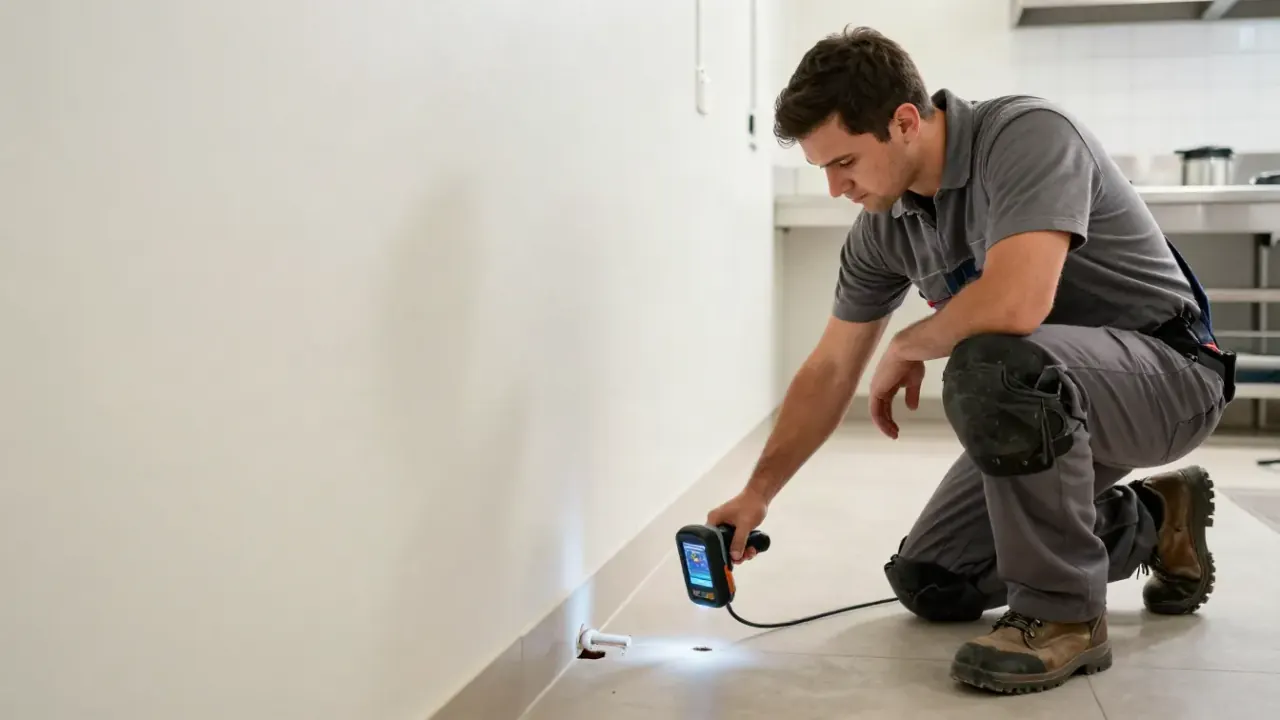
We isolate the irrigation and domestic lines, pressure test each, and find a pinhole leak in the copper service line under the lawn. We mark it with acoustic and thermal confirmation, then quote the repair.
Outcome: One small excavation instead of a full-line replacement. The next bill drops back to normal and the lawn stops sinking.
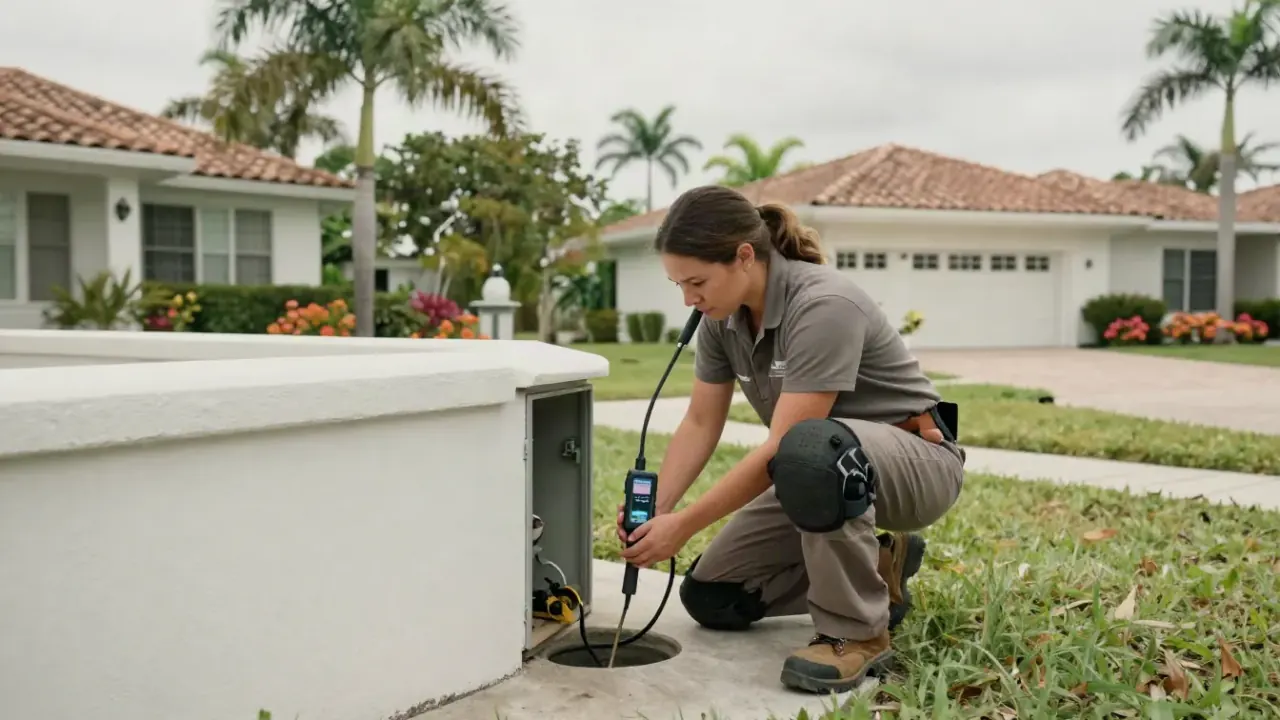
An equestrian property in Palm Beach Point loses pressure on a long water service line running under a paddock.
We walk the full run with acoustic listening devices and a thermal imaging camera, confirm with a moisture meter, and flag the break. We coordinate the repair so the paddock surface is disturbed as little as possible.
Outcome: Pressure restored at the barn and house. The arena and paddock stay usable, and the repair is done in one visit.
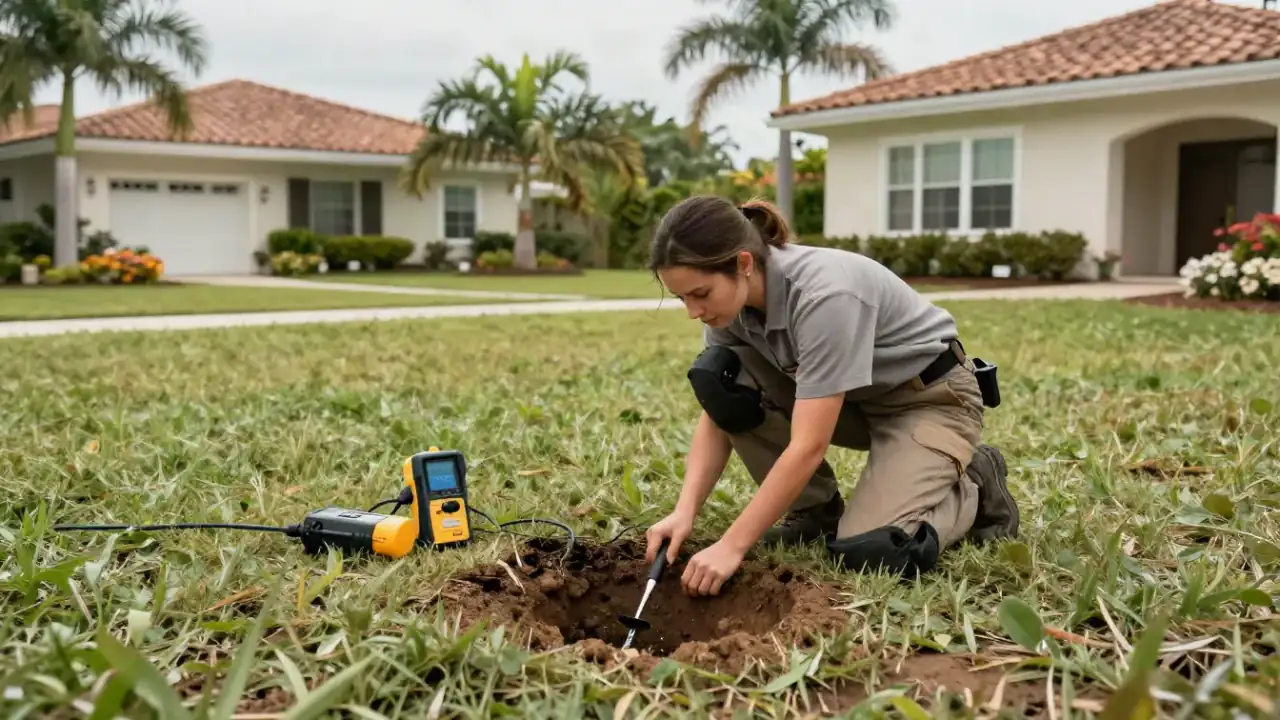
A commercial plaza in Royal Palm Beach has water surfacing in the parking lot near a tenant entrance.
We pressure test the main service line, use tracer gas to confirm the break under the asphalt, and mark the depth and location. The report goes to the property owner and repair crew the same day.
Outcome: The repair crew cuts one section of asphalt instead of trenching the lot. Tenants stay open and the leak stops.
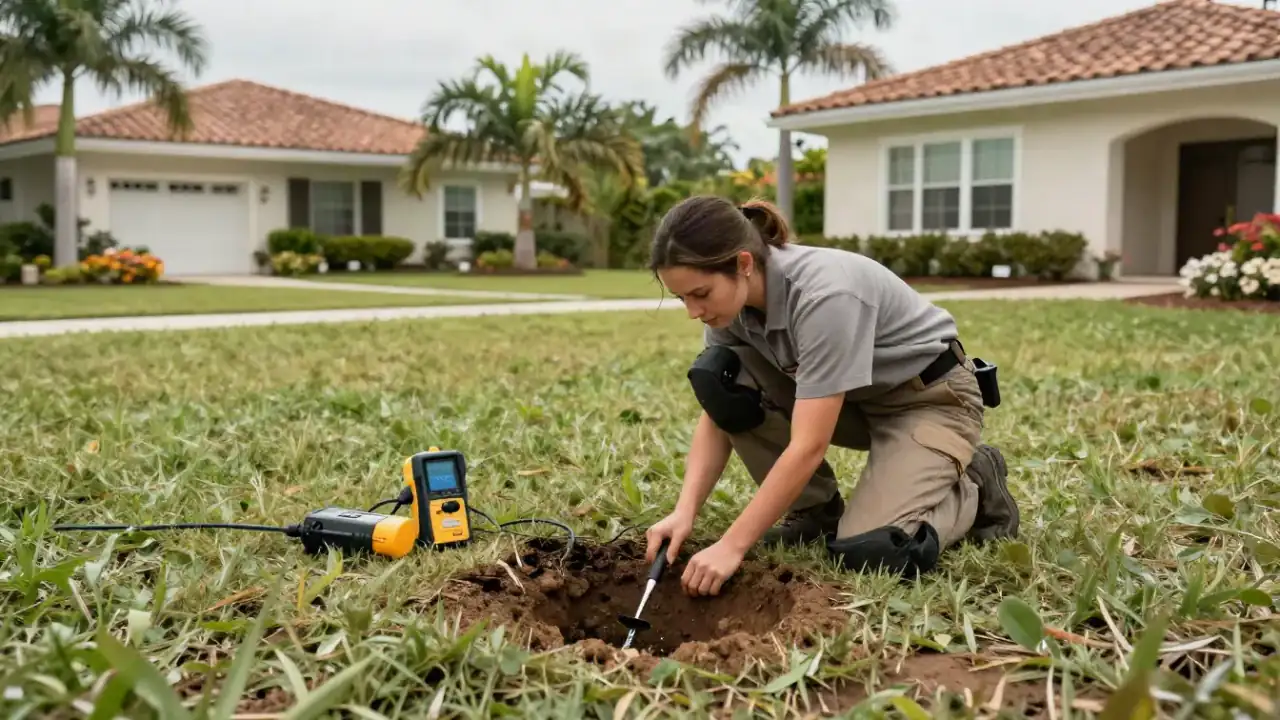
A pool owner in Grand Isles cannot tell whether the water loss is the pool shell or a buried line.
We pressure test the pool plumbing separately from the domestic line and locate the break with acoustic gear. If the leak is on the pool line, we mark it for the pool contractor.
Outcome: You know which system is leaking before you spend money on the wrong repair. The pool stops losing water.
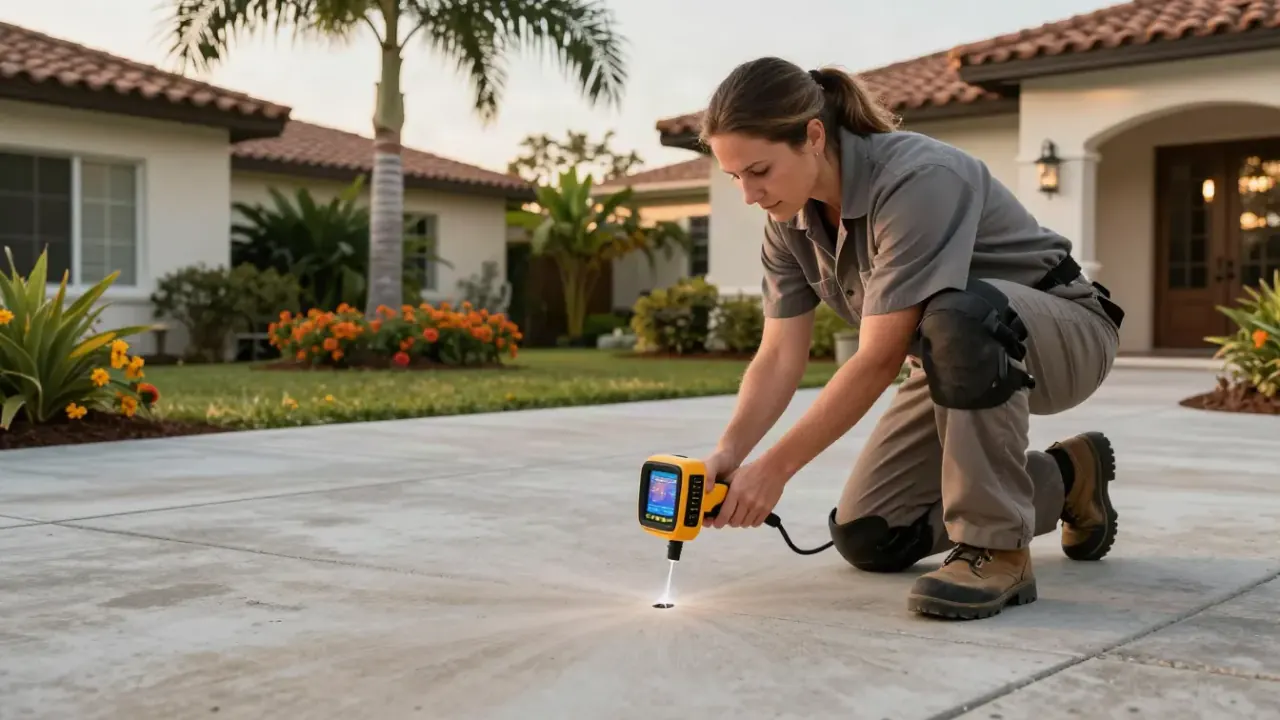
Wellington sits on sandy soil over a high water table, and that changes how buried leaks behave. Water from a pinhole leak in copper pipes or a cracked fitting on PEX tubing often travels sideways along the water table instead of surfacing where the break is. We account for that by tracing the moisture plume with moisture meters and thermal imaging cameras, then confirming the source with acoustic gear.
The area also has a lot of older PVC pipe and CPVC pipe on irrigation and service lines, and root intrusion is common near mature oaks and palms. If you need affordable underground leak detection Wellington FL, we schedule most calls within 24 hours and cover Palm Beach County from Wellington to Boynton Beach.
We also handle emergency underground pipe leak location in Wellington, Florida when a line fails and you cannot wait. For properties on well water or with long service runs, we use electromagnetic pipe locators to map the route before we sweep.
Before: The yard looked dry, and two plumbers could not find the leak without digging. The line was losing water under the lawn for weeks.
After: We pressure tested the domestic line, swept it with acoustic gear, and marked a pinhole leak in the copper service line within 18 inches. The plumber cut one small hole and repaired it in under an hour.
Have the line pressure tested once a year if your home has copper pipe older than 20 years.
Before: A plaza in Royal Palm Beach had water surfacing in the parking lot near a tenant entrance. The property owner was quoted a full lot trench because no one could pinpoint the break. Tenants were worried about access and downtime.
After: We pressure tested the main, confirmed the break with tracer gas, and marked the depth and location under the asphalt. The repair crew cut one 4-foot section instead of trenching the lot. Tenants stayed open the whole time.
Keep a marked plan of your underground service lines on file. When a leak happens, the repair crew knows exactly where to dig.
Before: A pool home in Grand Isles was losing water and the owner assumed the pool shell was leaking. The pool company found nothing. The water bill kept climbing and a soggy patch appeared along the side yard.
After: We isolated the pool plumbing from the irrigation line, pressure tested both, and located a cracked irrigation fitting with acoustic gear. The repair took one visit. The pool was fine, and the water bill dropped back to normal.
Run each irrigation zone manually once a month and watch for soggy spots. Catching an irrigation leak early keeps it from being mistaken for a pool or slab leak.
Most buried leaks show up as one of a handful of symptoms. Here are the ones we get called for most often, and what happens if you let them run.
One accurate mark saves thousands in exploratory digging and landscaping repair.
We mark the leak within a foot or two, so your contractor opens one small hole instead of trenching the whole line. You pay for accuracy, not excavation.
A hidden leak the size of a pencil tip can waste 20,000 gallons a month. We locate the break, you repair it, and the next bill drops back to normal.
Water migrating under a slab or pool deck softens soil and can crack concrete. We check moisture meters along the slab edge to confirm how far water has traveled.
Most residential underground pipe leak location jobs take two to four hours on site. We give you the marked location, a written summary, and photos the same day. No waiting a week for a report while water keeps running.
What a written scope covers and what shapes it. Prices are set by the business after the first look.
Included
Depends on
Clear records you can keep and share.
Images of readings and marked spot
Painted or flagged location on site
What failed and where
If you want us to fix it
Not every wet spot is a pipe leak, and not every pipe leak surfaces where the break is.
The buried line from meter to house
Sprinkler mains and zone lines
Waste line under the yard
A list like this tells people straight away whether you cover their street. Not listed? Call and ask: it only takes a minute.
Based in Wellington and covering the places around it. Pick one for local details.
We isolate each buried line, pressure test it, then walk the route with acoustic listening devices and an ultrasonic leak detector. We confirm the spot with a thermal imaging camera or tracer gas. Most residential locations take two to four hours and end with a painted mark within a foot or two of the break.
The three most common causes here are pinhole leaks in copper pipes from aggressive water chemistry, root intrusion on older PVC pipe and sewer line leaks, and soil movement that cracks fittings on PEX tubing. Wellington's high water table and sandy soil accelerate all three. A pressure test tells us which one you have.
Commercial and equestrian properties with multiple lines run higher. We quote the flat fee before we start, and it does not change if the leak is stubborn.
Sometimes. We can locate the leak without digging, and for accessible lines we can often repair with pipe repair clamps or epoxy pipe sealant through a single small excavation. If the line is under a slab, pool deck, or driveway, we mark it and your plumber cuts one opening instead of trenching the whole run.
Other services from the same team.
We answer the phone, quote a flat location fee, and schedule most calls within 24 hours. If your water bill is climbing or your yard has a wet spot that will not dry, call now and we will find the break before it costs you more.
Call us at (561) 760-4218 or email info@wellingtonleakdetection.com. Most inspections are scheduled same-day or next-day. We serve Wellington and all of Palm Beach County.