How to Prepare for a Leak Inspection Visit
A leak inspection goes faster and costs less when you clear access points, know where your shut-off valve is, and have your water bill handy. Here's the full prep checklist for Wellington homeowners.
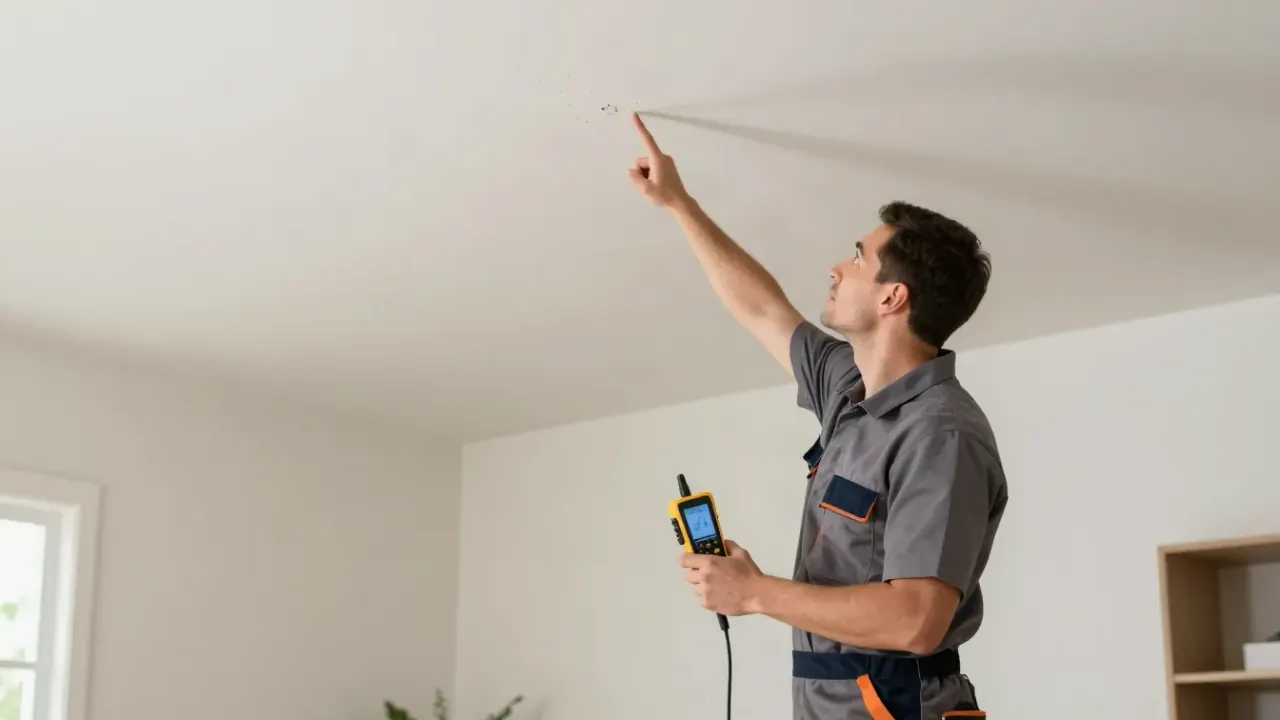
Preparing for a leak inspection visit in Wellington FL comes down to three things: clear access to your shut-off valve, water meter, and any suspect fixtures; a recent water bill for comparison; and a short list of symptoms you've noticed. That's it. You don't need to move furniture out of the house or drain your pipes. The rest of this guide walks through exactly what our technicians need when we pull up to your driveway, what we'll do while we're there, and the small things that save you time and money.
Wellington homes sit on a mix of 1980s-era copper, 1990s polybutylene, and modern PEX, and each one fails differently. A 1994 build in Binks Forest with original polybutylene fittings leaks at a different pace than a 2018 house in Isles at Wellington with a slab that's still settling. Knowing your home's vintage before we arrive helps us bring the right tools on the first trip.
What to Do Before a Leak Inspection in Wellington, Florida
How to prepare for a leak inspection visit in Wellington FL starts with a ten-minute walkthrough of your own house. Turn off every faucet, the irrigation timer, the pool autofill, and the ice maker. Then watch your water meter's leak indicator dial for five full minutes. If that little triangle or star is still spinning, you have a confirmed leak somewhere on the property - and that single observation is worth more to us than any description you can give over the phone.
Write down three things before we knock:
- The last two water bills, with dates. A jump from 4,000 gallons to 11,000 gallons tells us the leak started roughly when the bill cycle turned.
- Where you've seen or smelled moisture - a warm spot on the tile, a musty smell in the hall closet, a stain on the ceiling.
- Any recent work: a new irrigation zone, a pool pump replacement, a bathroom remodel, a fence post driven into the ground.
That last one matters more than people expect. We've traced more than a few "slab leaks" back to a sprinkler lateral punctured by a fence installer. If you tell us a crew was digging two weeks ago, we start outside instead of tearing into your flooring.
If your water bill has jumped but you can't find a wet spot anywhere, that's the classic signature of a hidden line leak. Our water meter leak investigation Wellington service exists specifically for that scenario - we isolate the irrigation, pool, and domestic lines one at a time until the meter stops moving.
How Long Does a Leak Inspection Take in Wellington?
A standard residential leak inspection in Wellington takes 60 to 90 minutes for most single-family homes. That covers the meter test, a full pressure check, acoustic listening on accessible lines, and thermal imaging on any wall or floor you've flagged. Larger properties - equestrian lots in Saddle Trail Park, homes with detached guest houses, or anything over 4,000 square feet - usually run two to three hours because there's simply more pipe to walk.
Commercial properties take longer. A restaurant or retail space with multiple restrooms, a grease line, and an irrigation system typically needs a half-day. We schedule those separately so we're not rushing a residential job to make the next appointment.
Here's what the clock actually looks like on a typical 1,800-square-foot home:
- 0-15 minutes: Walkthrough, meter confirmation, shut-off valve check.
- 15-45 minutes: Pressure test and acoustic survey of accessible lines.
- 45-75 minutes: Targeted investigation - thermal camera, moisture meter, or tracer gas depending on what the first pass found.
- 75-90 minutes: Findings review, written report, and a plain-English explanation of repair options.
You don't have to hover over us the whole time. Most homeowners check in at the start and again at the end. If you'd rather watch, that's fine too - we'd rather answer questions in person than have you wonder what we found.
Clear Access to These Five Areas Before We Arrive
Access is the single biggest factor in how fast a leak inspection goes. If we spend twenty minutes moving boxes out of a garage to reach the water heater, that's twenty minutes we're not spending finding your leak. Five spots matter most:
1. The main shut-off valve
Know where it is and make sure it turns. In Wellington, that's usually a brass gate valve in the garage, a box near the street, or on older homes, a valve at the side of the house behind the AC pad. If it's seized, tell us - we'll work around it, but you'll want it freed up eventually.
2. The water meter box
It's typically in a concrete or plastic box near the curb. Trim the grass back, pop the lid, and make sure no fire ants have moved in. We'll lift it ourselves, but a clear box saves us a few minutes and a few bites.
3. The water heater closet or garage pad
Clear a three-foot radius. We need to see the pan, the T&P valve, and the supply lines. A water heater that's weeping from the relief valve can mimic a slab leak on your bill.
4. Under every sink
Empty the cabinet below the kitchen and bathroom sinks. We're looking for corrosion on the shut-off valves, moisture on the cabinet floor, and evidence of a slow supply-line drip. A cabinet packed with cleaning supplies hides all three.
5. The irrigation control box and any valve boxes
If you have a sprinkler system, know which zone covers which part of the yard. We'll run each zone for two minutes and watch the meter. A zone that pulls water when it's supposed to be off is a broken lateral, and that's a 15-minute fix instead of a slab investigation.
Pool owners should also leave the pump running normally. We check the equipment pad for air in the pump basket and dye-test the skimmer - a pool losing an inch a day in October is losing it somewhere, and it's not always evaporation. Our pool leak detection Wellington service handles those calls weekly.
What Information Should You Have Ready for a Leak Inspection?
Have your last two water bills, the approximate age of the house, and any plumbing work done in the last 24 months ready when we arrive. That's the short answer. The longer answer is that the more context you give us, the fewer diagnostic steps we have to run - and diagnostic steps are what you're paying for.
Useful details we ask about on almost every call:
- House age and construction type. A 1985 home on a post-tension slab behaves differently from a 2005 home on a conventional slab. Post-tension slabs have cables running through them, and we will not core-drill one without knowing.
- Water source. Wellington utilities draw from a mix of surface and well water. High mineral content accelerates pinhole leaks in copper, so if you're on a well, say so.
- Recent landscaping. New sod, a tree planted near the driveway, or a mailbox post set in concrete - all of those are common puncture points for service lines.
- Any prior leak repairs. If a plumber already fixed a leak under the slab two years ago, we want to know where and how. Recurring leaks in the same spot usually mean the original repair didn't address the cause.
- Your schedule. If you need to leave by 2 p.m., tell us when you book. We'd rather start earlier than rush the last twenty minutes.
One more thing: if you have a home warranty or insurance policy that might cover the repair, have the policy number handy. We don't file claims for you, but we can format the report the way most carriers want it. That saves a phone call later.
Common Mistakes Wellington Homeowners Make Before an Inspection
The most common mistake is turning the water back on before we arrive. If you shut off the main to stop a leak and then turn it back on "just to do dishes," you've re-pressurized the line and potentially widened the leak. Leave it off. We'll turn it on when we're ready to test.
Other mistakes we see regularly:
- Running the irrigation the morning of the visit. Wet ground makes acoustic detection harder and can mask a sprinkler leak we'd otherwise catch in five minutes.
- Draining the pool or spa. Don't. We need the system at normal operating level to dye-test properly.
- Cleaning up the evidence. If you mopped up a puddle under the sink, leave a towel or a photo. We'd rather see the stain than a spotless cabinet.
- Assuming the leak is where the water shows up. Water travels. A stain on the ceiling in the hallway often traces back to a bathroom 20 feet away. That's why we use thermal imaging and moisture meters instead of just looking at the visible damage.
- Letting the dog have the run of the house. Friendly dogs are fine, but a anxious one in a small bathroom while we're running a camera is a hazard for everyone. Crate or yard them for the visit.
If you've already pulled up flooring or opened a wall chasing the leak yourself, that's not a mistake - just tell us. We'll inspect what you exposed and then verify whether the source is actually there. About a third of the time, it isn't.
When to Call a Professional
Call a professional when your water meter spins with everything off, when you hear water running inside a wall at night, or when a hot spot appears on your floor. Those three symptoms point to a pressurized line leak, and pressurized leaks don't heal. They grow.
Wellington's soil is a factor here. We sit on a mix of sand and muck, and the water table rises noticeably during the summer rainy season. A pinhole leak in a copper service line that drips slowly in February can turn into a steady stream by August, when the surrounding soil is already saturated. Waiting until "after the holidays" is how a $450 leak location turns into a $4,000 slab repair.
We handle the full range - from a slab leak detection Wellington homeowners call us about after seeing a warm spot on the tile, to a water service line leak detection Wellington job where the meter box is full of water and the yard has a green stripe running to the street. We find the leak, tell you what it is, and give you a flat price to fix it before we start. No surprises on the invoice.
Frequently Asked Questions
How do I prepare for a leak inspection in Wellington FL?
Turn off all water-using appliances, confirm your meter's leak indicator is spinning, gather your last two water bills, and clear access to the shut-off valve, water meter, water heater, and under-sink cabinets. That's a 15-minute job and it cuts inspection time by roughly 20 minutes.
What should I do before a leak detection visit in Wellington?
Leave the main water valve in whatever position it's in, don't run the irrigation that morning, and write down every symptom you've noticed - warm spots, musty smells, bill increases, sounds. Photos of any moisture or staining help us more than a verbal description.
How long does a leak inspection take in Wellington?
Plan on 60 to 90 minutes for a typical single-family home. Homes over 4,000 square feet, properties with detached structures, and commercial spaces take two to four hours. We'll give you a realistic window when you book.
What information should I have ready for a leak inspection?
Your last two water bills, the age of the house, any plumbing or landscaping work done in the past two years, and the location of your main shut-off valve. If you have a home warranty, have the policy number available so we can format the report correctly.
Do I need to be home during the leak inspection?
You don't have to be, but we prefer it. We can walk you through the findings on the spot, show you the thermal images, and answer questions while the details are fresh. If you can't be there, we'll leave a written report and call you the same day.
Get Help with Leak Detection in Wellington
If your meter is spinning and you can't find the source, don't wait for the next bill to confirm what you already suspect. We serve every Wellington neighborhood - from Leak Detection in Palm Beach Polo to the equestrian properties out toward Loxahatchee Groves - and we carry the acoustic, thermal, and tracer-gas equipment to find leaks behind walls, under slabs, and underground without tearing your house apart.
Call Wellington Leak Detection at (561) 760-4218 to schedule your inspection. We'll confirm a time window, tell you exactly what to have ready, and show up when we say we will.